

The 2026 House Battleground: 19 Toss-Up Districts, a 6-Seat Math Problem, and What an 87¢ Market Is Pricing In
Cook Political Report rates 19 House districts Toss-Up in 2026. Democrats need 6 seats and hold an 87% market edge. Here's the full battleground breakdown.
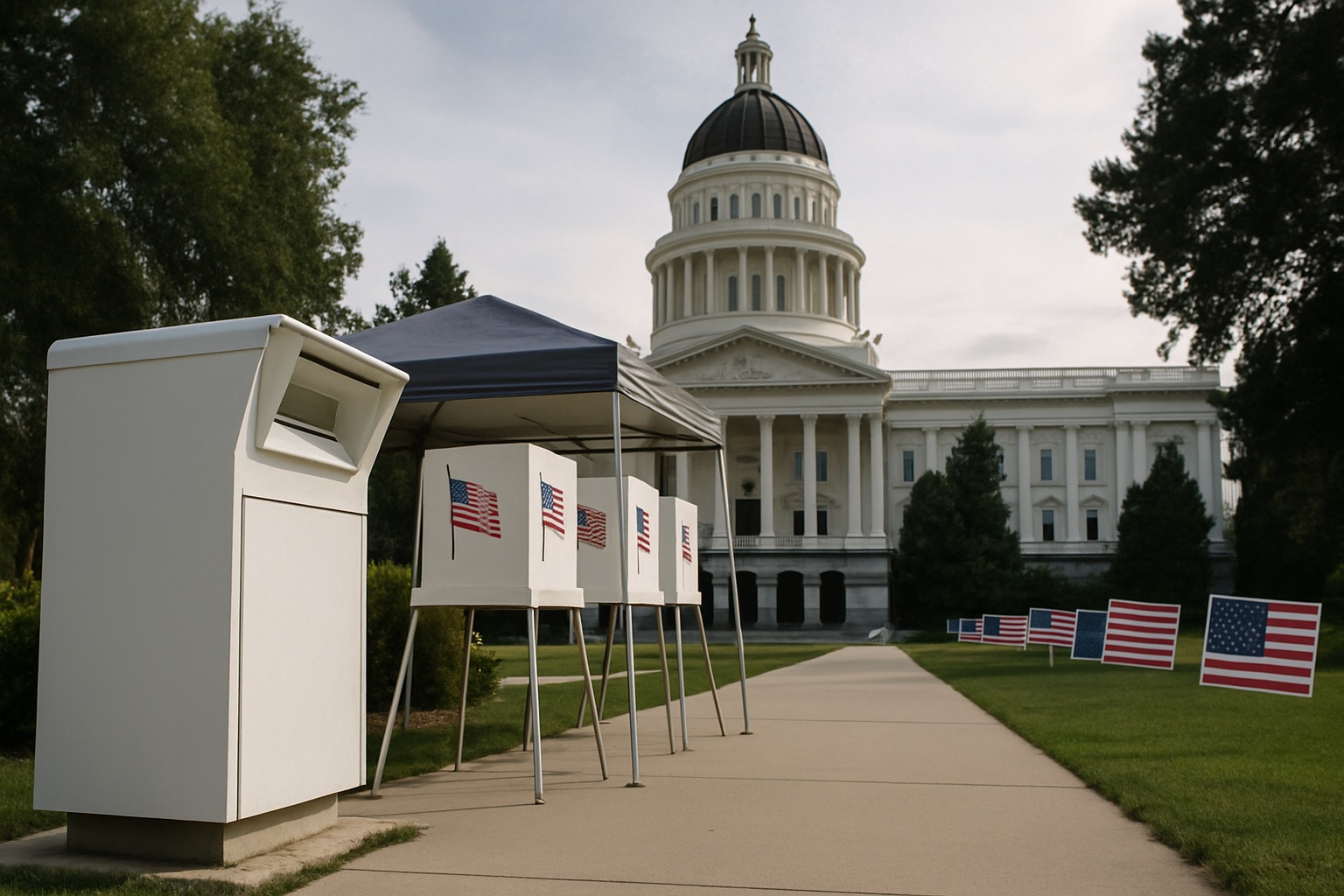
The prediction market for House control is trading at 87 cents for Democrats — an 87 percent implied probability that they retake the chamber on November 3. That is not a certainty. But it reflects something real: the broadest set of Republican-held congressional toss-ups in years, facing a national environment that has historically punished the president's party at this severity.
With 73 days to election day, here is a full breakdown of the 2026 House battleground — the districts that will decide control, the market context, and what the numbers actually tell you.
The Math: Six Seats, One Chamber
Republicans head into November holding a 218-212 House majority with five seats vacant. Winning a majority requires 218 votes — which means Democrats need a net gain of six seats from where they stand today.
That's a modest target by historical standards. In 2018, Democrats gained 41 House seats. In 2010, Republicans picked up 63. Six seats is a floor, not a ceiling, in any genuine wave environment.
Cook Political Report currently rates 19 House districts as Toss-Ups — the most contested tier in its seven-point rating scale. Of those 19, 15 are held by Republicans and 4 by Democrats. If Democrats simply held their own toss-ups and won a bare majority of the 15 Republican-held ones, they would exceed the majority threshold by a significant margin.
The structural math, in short, favors Democrats — provided the environment holds through November.
The Generic Ballot: What D+6 Has Meant Historically
Across every major polling aggregator, Democrats lead the national congressional generic ballot by approximately 6 percentage points as of August 2026. Decision Desk HQ's tracking average shows Democrats at roughly 47 percent to Republicans' 41 percent. A national Emerson College poll released July 23 put the margin at 11 points — an outlier, but pointing in the same direction as every other public measure.
Historical context matters here. In 2018, Democrats carried a D+8 national environment and gained 41 House seats. In 2006, a D+10 environment produced 31 Democratic gains. A D+6 environment, sustained through election day, has historically correlated with Democratic seat gains well above the six-seat threshold Democrats need in 2026.
Decision Desk HQ's modeling, applying a uniform 6-point swing across all congressional districts adjusted for redistricting, projects Democrats leading in 222 seats — a comfortable majority — if the generic ballot stays where it is. The same model cautions that the relationship between national environment and individual district outcomes is not mechanical. Candidate quality, fundraising, incumbency, and local issues all introduce variance that can move individual races several points off the generic baseline.
The 19 Toss-Up Districts
Cook Political Report's August ratings list 19 House toss-ups. The full breakdown:
Republican-held (15): Arizona's 1st (open), Arizona's 6th (Ciscomani), California's 22nd (Valadao), Colorado's 8th (Evans), Iowa's 1st (Miller-Meeks), Iowa's 3rd (Nunn), Michigan's 7th (Barrett), New Jersey's 7th (Kean Jr.), New York's 17th (Lawler), Ohio's 7th (Miller), Pennsylvania's 7th (Mackenzie), Pennsylvania's 8th (Bresnahan), Pennsylvania's 10th (Perry), Virginia's 2nd (Kiggans), Wisconsin's 3rd (Van Orden).
Democratic-held (4): Florida's 25th (Moskowitz), Ohio's 9th (Kaptur), Texas's 34th (Gonzalez), Washington's 3rd (Perez).
Beyond the toss-up tier, Cook rates 10 seats as Lean Democrat and 9 as Lean Republican — meaning the broader competitive field runs to 38 districts. Republicans would need to win an implausibly large share of every competitive seat to keep the majority if the environment holds.
Five Republican-Held Seats to Watch
New York's 17th: The Map's Most Cited Swing District
No district has attracted more attention on the 2026 House map than New York's 17th, covering Westchester and Rockland counties in the lower Hudson Valley. Republican incumbent Mike Lawler won the seat in 2022 by fewer than one percentage point. Kamala Harris narrowly carried the district at the presidential level in 2024 — making it one of a handful of Republican-held seats where the presidential and congressional results point in different directions.
Cook Political Report and Inside Elections rated NY-17 as a Toss-Up throughout the spring. Sabato's Crystal Ball moved it from Lean Republican to Toss-Up on July 30, creating a unanimous three-rater consensus. Democrats nominated Cait Conley, a national security professional and district native who has proven a competitive fundraiser. A survey commissioned by the House Majority PAC and conducted by FM3 Research in late June and early July — a Democratic-aligned poll — showed Conley leading Lawler 51 to 45 percent among likely voters, per Newsweek's reporting. That survey should be read with appropriate partisan-funding caveats, but the structural fundamentals support a genuinely competitive race regardless of who commissioned the poll.
New Jersey's 7th: The Seat a Forecaster Has Already Tilted
Tom Kean Jr. holds New Jersey's 7th district in Morris County and the western New Jersey suburbs — a seat Trump carried by roughly 1.2 points in 2024. Inside Elections moved NJ-07 from Toss-Up to "Tilt Democratic" in June 2026, the only Republican-held seat a major forecaster has moved past the toss-up line into Democratic territory. Cook still rates it Toss-Up.
The divergence between forecasters illustrates how fine the margins are in the most competitive districts. New Jersey's proximity to the New York media market makes it particularly sensitive to national environment signals.
Pennsylvania's 7th and 8th: The Lehigh Valley and the Late Mover
Pennsylvania now has three districts in the Toss-Up tier, the most of any state. In the 7th, Republican incumbent Ryan Mackenzie faces Democrat Bob Brooks, a firefighter running on an economic-change message. The Morning Call, which covers the Lehigh Valley region where the district sits, reported August 21 that Mackenzie has maintained a fundraising advantage — but that the race is "widely considered to be one of the handful of House elections that will determine which party takes control of the chamber." Cook rates it Toss-Up. Trump won the district by roughly 3 points in 2024.
Pennsylvania's 8th district, held by Republican Rob Bresnahan in the northeastern corner of the state, moved into the Toss-Up column on July 30 when Sabato's Crystal Ball shifted 13 House seats simultaneously toward Democrats. The district gave Trump a roughly 8-point margin in 2024 — making it among the redder terrain in the toss-up tier, but redistricting and a favorable national environment have made it competitive.
Michigan's 7th: The Midwestern Bellwether
Tom Barrett holds Michigan's 7th district — the Lansing-area seat — after winning it in the 2024 open-seat race. House Speaker Mike Johnson visited the district in August to signal Republican investment, telling reporters he was "bullish" on Republican chances, per Michigan Advance. Barrett's Democratic challenger is William Lawrence, a housing advocate and Lansing-area organizer.
All three major forecasters rate MI-07 as a Toss-Up. Trump's 2024 margin in the district was barely over one point — among the narrowest for any Republican incumbent on the entire competitive map. Both parties are treating it as a premier House battleground.
Colorado's 8th: Suburban Denver, Near-Even Terrain
Gabe Evans holds Colorado's 8th, a suburban Denver district where Trump's 2024 margin was less than half a percentage point. Evans won the seat in 2024 in what was a close race. Cook has rated it a Toss-Up throughout the 2026 cycle, and the district's near-even partisan composition gives neither side a structural cushion.
The Seats Democrats Must Hold
Democrats are not entirely on offense. Four of the 19 toss-ups are their own seats — and losing one or more would eat directly into the net gain they need.
Washington's 3rd (Marie Gluesenkamp Perez): This southwestern Washington district voted for Trump by more than 3 points in 2024. Perez has won twice as a culturally moderate rural Democrat, a profile that can outperform partisan baselines. A favorable national environment for Democrats doesn't neutralize the district's Republican lean at the presidential level.
Ohio's 9th (Marcy Kaptur): Kaptur is the longest-serving woman in congressional history, representing a Toledo-area district that has trended sharply Republican in recent presidential cycles. The structural headwinds are real, and Kaptur's personal incumbency advantage is the principal offset.
Texas's 34th (Vicente Gonzalez): The Rio Grande Valley district has been part of the broader Hispanic voter realignment that has moved the Texas border region toward Republicans over two election cycles. Trump carried the redrawn district by approximately 10 points in 2024.
Florida's 25th (Jared Moskowitz): The Broward County-area seat sits in a broader Florida environment that has shifted toward Republicans in recent cycles, though the specific district makeup and Moskowitz's profile have kept it competitive.
What the Balance-of-Power Market Adds
The House control market tells you the most likely outcome for one chamber. The balance-of-power market — tracking all four possible outcomes for Senate and House combined — adds texture.
The balance-of-power market — which tracks all four possible combinations of Senate and House control — prices a Democratic sweep as the most likely single outcome, followed by a split Congress (Republican Senate, Democratic House) as the next most probable scenario, with a full Republican sweep as the least likely. The clear consensus across both markets: the House is much more likely to flip than the Senate, and a split Congress where Democrats retake the House but not the Senate is treated as a serious base-case scenario.
Reading the 87¢ Market Correctly
Eighty-seven cents on Democratic House control means 87 percent implied probability — not certainty. Markets can be wrong, and the cases where they'd be wrong here are worth naming.
A meaningful narrowing of the generic ballot — from D+6 toward D+2 or D+3 — would compress Democratic advantages in the marginal toss-ups that determine the majority. Historical midterms have sometimes seen late movement toward the president's party as the election approaches and turnout models sharpen.
Redistricting effects are already embedded in forecasters' models, but the uncertainty bands around specific districts remain wide. Republicans only need to hold roughly 10 of their 15 toss-up seats — while picking up at least some Democratic-held toss-ups — to keep their majority. That is not an impossible path if conditions shift.
What the market is saying, at 87 cents, is that the combination of environment, seat composition, and structural math makes that Republican path the harder one to walk — not that the path is closed.
The 19 toss-up districts listed above are where control of the next Congress will actually be decided. Watch the generic ballot, watch the fundraising disclosures, and watch whether any of these seats move out of the competitive tier between now and November 3.
Frequently Asked Questions
How many seats do Democrats need to win the House in 2026? Republicans hold a 218-212 majority with five seats vacant. Democrats need a net gain of six seats to reach the 218-seat majority threshold. With 15 Republican-held Toss-Up seats and only 4 Democratic-held toss-ups, the structural map gives Democrats multiple paths to that threshold.
What are the most competitive House districts in 2026? Cook Political Report rates 19 districts as Toss-Ups as of August 2026. The most closely watched Republican-held seats are New York's 17th (Lawler), Michigan's 7th (Barrett), Pennsylvania's 7th (Mackenzie), New Jersey's 7th (Kean Jr.), and Colorado's 8th (Evans). All five are in districts Trump won by 5 points or fewer in 2024.
What does the generic ballot predict for House control? Polling aggregators show Democrats leading the generic congressional ballot by approximately D+6 as of August 2026. Historically, a D+6 environment has correlated with Democratic seat gains of 20 to 30 seats — well above the six-seat net gain they need. However, redistricting, candidate quality, and turnout all introduce significant variance from the national average in individual districts.
Why is the House control market priced so heavily toward Democrats? The 87-percent Democratic probability reflects the combination of a favorable generic ballot environment, the distribution of toss-up seats (15 Republican-held versus 4 Democratic-held), and historical patterns around presidential approval in midterm elections. Markets are not infallible; a shift in the national environment could rapidly reprice. Current odds reflect conditions as of August 22, 2026.
Sources: Cook Political Report House Race Ratings, cookpolitical.com (Aug. 12, 2026); Cook Political Report Open Seat Tracker (Aug. 19, 2026); New York Times 2026 Midterms Tracker, nytimes.com (Aug. 20, 2026); Decision Desk HQ, "Democrats recover their generic ballot edge," Aug. 14, 2026; The Hill, "Democrats hold 11-point lead over GOP on generic ballot: Poll," Jul. 23, 2026; The Hill, "Cook Political Report shifts 18 House races toward Democrats," Jan. 15, 2026; The Morning Call, "Bob Brooks promises 'change' in his bid for Congress," mcall.com, Aug. 21, 2026; Michigan Advance, "In visit to a vital battleground district, Johnson said he's 'bullish' on Republicans' 2026 chances," Aug. 18, 2026; Newsweek, "10 House seats Democrats could flip in 2026 — and what the polls say," Jul. 28, 2026. Market odds from electionpredictions.us, current as of Aug. 22, 2026.