
Tuesday Night Is AIPAC's 2026 Report Card: What the Markets Say Heading Into Michigan and MO-01
Michigan and MO-01 vote simultaneously on August 4 — the biggest dual test of AIPAC's 2026 strategy and the Democratic Party's Israel divide.
The markets have spent weeks treating Michigan and Missouri as two separate stories. On Tuesday, August 4, they vote simultaneously — and together they will deliver the 2026 primary cycle's most concentrated data point on the Democratic Party's relationship with AIPAC and Israel.
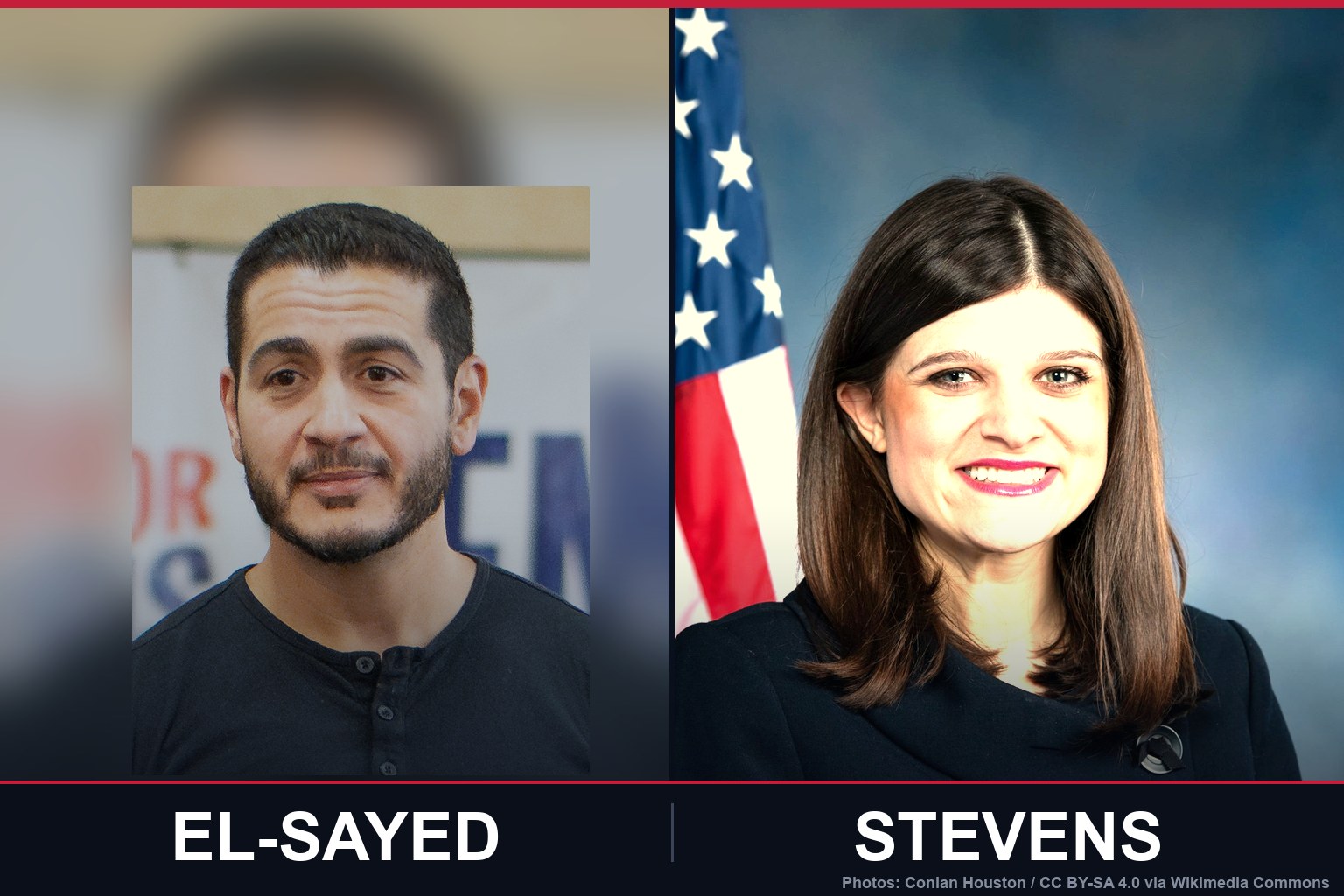
In Michigan, the cross-platform consensus prices progressive Abdul El-Sayed to win the Democratic Senate nomination at 94¢ over centrist Rep. Haley Stevens at 6¢, across $7.28 million in volume on Kalshi, PredictIt, and Polymarket.
In Missouri's 1st Congressional District, markets have consistently favored incumbent Rep. Wesley Bell over former Rep. Cori Bush heading into Tuesday's vote.
The alignment is the point: El-Sayed and Bush are AIPAC's sharpest Democratic critics. Stevens and Bell are the candidates AIPAC's principal political action committee, the United Democracy Project, has funded heavily. Both verdict arrive in the same news cycle.
How the Money Lines Up
UDP has spent approximately $30 million supporting Stevens in Michigan this cycle, according to AdImpact data reported by CNN — a record level of outside spending for a Senate Democratic primary. [CNN, July 26] In Missouri's 1st District, UDP has spent over $1.5 million backing Bell. [CNN, July 26]
Bell is the incumbent. In 2024, UDP spent more than $8 million to help him defeat Bush in their first primary matchup. Bell won that primary and the general election that November. Now Bush is running to reclaim the seat she held for one term.
El-Sayed has made UDP's spending the organizing frame of his campaign, attacking Stevens for aligning herself "with AIPAC and Republicans to continue to fund a war machine." Bush's campaign has accused Bell of "abandoning" Missourians and "jetting off to Israel with AIPAC." [Politico, July 30]
Why the Outcomes Don't Carry Equal Weight
Michigan and Missouri are not equivalent tests, and the markets price them at opposite ends of certainty for structural reasons.
Michigan is a purple swing state with a Senate seat that matters directly for chamber control. El-Sayed or Stevens will face Republican Mike Rogers in November — a candidate who came within roughly 20,000 votes of capturing Michigan's other Senate seat two years ago, per The Atlantic (July 30). The cross-platform Senate control market prices Republicans to hold the chamber at 56¢, with Michigan's Democratic nominee as the single largest near-term variable.
That November risk is why El-Sayed sits at 94¢ rather than 99¢ despite his consistent polling leads: traders are pricing both races simultaneously. A Glengariff Group survey conducted July 22–24 for the Michigan Education Association showed Rogers leading El-Sayed by 10 points in a hypothetical November matchup while running effectively tied against Stevens. The six-cent discount on an otherwise decisive primary market reflects that gap.
Missouri's 1st is a different calculation. It is a deeply Democratic urban district where the Democratic nominee wins the general election. The stakes are purely intraparty: whether Bush's Ferguson-rooted coalition in St. Louis city generates enough turnout to overcome Bell's structural advantage in the more populous St. Louis County suburbs. As St. Louis University political scientist Kenneth Warren told CNN: she will likely win the city, "but it's not going to be enough to offset the much larger county vote." [CNN, July 26]
What Anti-AIPAC Framing Is Actually Doing
Polling in both states suggests most voters are not focused primarily on Israel and Gaza when making their choices. But the anti-AIPAC message has become a vehicle for something broader.
"Progressives are using Israel and specifically AIPAC to drive home the point of a rigged system where money and special interests have too much control over our outcomes," Democratic strategist Terrance Woodbury told CNN. "It does create a unique target for progressives who say 'they can't be trusted in a rigged system.' It's not a top issue; but it's a defining issue." [CNN, July 26]
The backdrop is a documented shift in American public opinion. Gallup polling shows the share of Americans expressing a favorable view of Israel dropped from 75% in 2021 to 46% in 2026 — a 29-point decline Gallup compared to the collapse in U.S. attitudes toward Russia following the 2014 Crimea annexation. Among Democrats specifically, the erosion has been sharper: recent Pew Research Center data showed just one-sixth of Democrats view the Israeli government favorably. [Gallup Organization and Pew Research Center, as reported by CNN, July 26]
That is the environment in which UDP has spent a record amount in Democratic primaries this cycle.
What Tomorrow Night Actually Tells the Party
Politico framed Tuesday as a test of "pro-Israel Democrats' role in the party, this year and in the future." [Politico, July 30] The two most likely scenarios:
El-Sayed wins Michigan, Bell holds Missouri. The most plausible outcome per current pricing. It produces no clean verdict: progressives claim Michigan as proof of the anti-AIPAC wave's reach into competitive states; AIPAC defenders point to Bell in a rematch against the same opponent they already beat. The party's internal debate continues unresolved.
El-Sayed and Bush both win. The scenario AIPAC's critics have organized for. It would represent the deepest progressive penetration yet into a competitive Senate race and a recurring House incumbent. It would also trigger an immediate repricing of Senate control odds: a Michigan seat with El-Sayed against Rogers is a different proposition than one with Stevens.
The Senate control market at 56¢ Republican is watching Michigan's result most closely. Whatever happens in Missouri, the market's next major inflection point comes from how Rogers vs. El-Sayed polls look in the days after August 4.
Markets will start moving before the networks call anything Tuesday night.
Sources: CNN / Ronald Brownstein (July 26): UDP/AdImpact spending data, Gallup and Pew polling figures, Kenneth Warren and Terrance Woodbury quotes; Politico (July 30): "Two looming primaries will test pro-Israel Democrats' role in the party"; The Atlantic (July 30): Rogers general-election context; Glengariff Group / Michigan Education Association poll (July 22–24): Rogers vs. El-Sayed and Stevens matchups. Market data: cross-platform consensus (Kalshi, PredictIt, Polymarket).