

Alaska Senate 2026 Race Guide: Mary Peltola, Dan Sullivan, and the Ranked-Choice Tossup That Could Flip the Majority
Alaska Senate 2026: Peltola vs. Sullivan in a genuine tossup. Record fundraising, ranked-choice voting mechanics, and Senate control implications with our live market embeds.
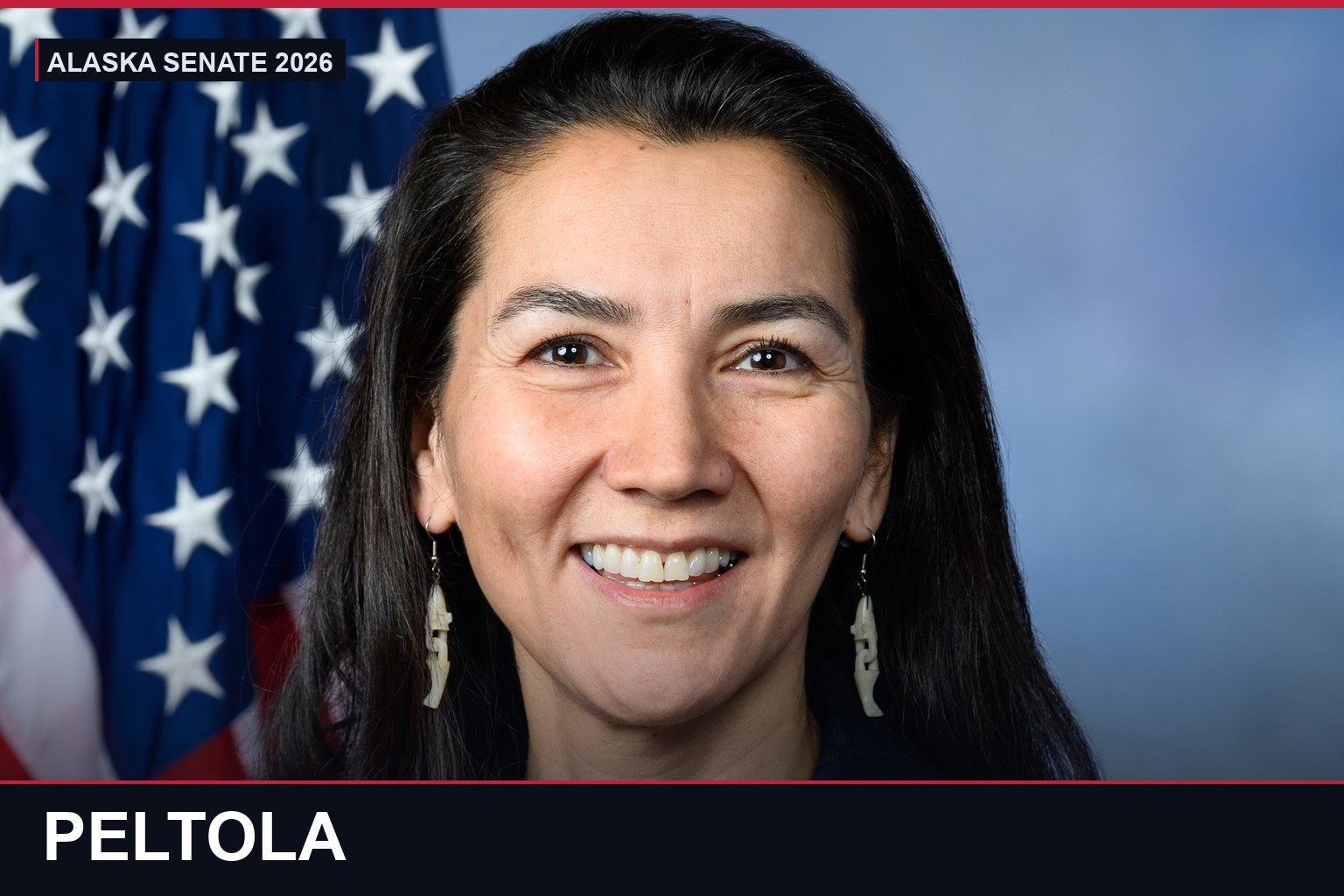
Two weeks out from Alaska's August 18 primary, a high-profile Democratic challenger has turned one of the country's safest-looking Republican Senate seats into a genuine tossup — with ranked-choice voting as the fulcrum.
Republican Sen. Dan Sullivan is seeking a third term in a state that has not elected a Democrat to the Senate since 2008 and that President Trump carried by 13 points in 2024. His challenger, former Rep. Mary Peltola, has raised more money than any Senate candidate in Alaska's history, leads in recent polling, and carries a cross-partisan profile uniquely suited to Alaska's nonpartisan election system.
Whether that profile is enough to flip a seat in such deeply Republican territory is the defining question of Alaska's Senate race — and one with direct implications for which party controls the chamber come January 2027.
The Election System: Top-Four Primary, Then Ranked Choice
Alaska's election structure is unlike most Senate states, and understanding it is essential to reading this race.
On August 18, 2026, Alaskans will vote in a nonpartisan open primary. All candidates — regardless of party — appear on the same ballot, and voters pick their preference. The top four vote-getters advance to the general election on November 3, where voters rank their choices under ranked-choice voting (RCV).
Alaska adopted this system through Ballot Measure 2, which passed 51% to 49% in November 2020, according to Ballotpedia. This is the third consecutive federal election cycle in which Alaska has used the top-four primary with ranked-choice runoffs.
The primary field includes 16 declared candidates, but the race is effectively two-way. Dan Sullivan and Mary Peltola have received nearly all the money and media attention. Among the other candidates on the ballot is a retired teacher from Petersburg named Dan J. Sullivan — who shares the incumbent's full name, won a court challenge to appear on the ballot, and has raised no money. His presence introduces a genuine voter-confusion variable under ranked-choice tabulation that election observers have flagged as worth watching, according to Alaska Beacon reporting from June 2026.
The Candidates
Dan Sullivan, 61, has served as Alaska's junior senator since January 2015. A Marine Corps Reserve colonel, former Alaska attorney general, and former state commissioner of natural resources, he has built a record centered on military readiness, energy development, and federal investment in Alaska's defense infrastructure. Alaska hosts roughly 20% of all U.S. military assets, a fact Sullivan has highlighted throughout his tenure.
He won his 2020 reelection by 12.7 points over independent Democrat Al Gross — a comfortable margin that placed him in the Safe Republican column entering 2026. He has received an endorsement from President Trump and the backing of Sen. Lisa Murkowski (R-AK), who announced her support for Sullivan within hours of Peltola entering the race. The Senate Leadership Fund, the main Republican Senate super PAC, has committed $15 million in support of his reelection, according to Alaska Public Media.
Sullivan's net approval rating has deteriorated since 2020, with Alaska Survey Research polling first recording negative net approval in late 2025 — an unusual development for a two-term Republican incumbent in a red state. His campaign emphasizes his cash-on-hand advantage and argues that fundraising totals do not determine winners in Alaska: when Sullivan faced reelection in 2020, independent challenger Al Gross substantially outspent him and still lost by nearly 13 points.
Mary Peltola, 51, is Yup'ik and from the Yukon-Kuskokwim Delta in rural western Alaska. She served in the Alaska State Legislature for a decade before being elected in August 2022 to the U.S. House in a special election following the death of Rep. Don Young — making her the first Alaska Native woman and the first woman of any background elected to Congress from Alaska. She won re-election that November and narrowly lost her 2024 House bid to Republican Nick Begich III by fewer than three percentage points, despite Trump carrying the state by 13. She outperformed Vice President Kamala Harris's Alaska showing by 11 points that year, according to the Democratic Senatorial Campaign Committee.
Peltola announced her Senate campaign on January 12, 2026, framing the race around rural Alaska economic priorities, subsistence fishing rights for Alaska Native communities, salmon fishery protection, and what she calls "a rigged system in D.C. that is putting special interests first." Her campaign has mobilized more than 10,000 volunteers across Alaska, her spokesperson said in July 2026, according to Alaska Public Media.
The Money Race
Fundraising has been the most quantifiable advantage of this campaign, and the gap strongly favors the challenger.
Through June 30, 2026, Peltola's campaign had raised $15.6 million and spent $9.5 million, leaving $6.1 million in cash on hand, according to Federal Election Commission filings. Sullivan's campaign had raised $11.1 million through the same period and spent $3.5 million, leaving $8.3 million on hand — a cash-on-hand edge for the incumbent.
Peltola's first-quarter haul was the headline number: $8.9 million raised between January and March 2026, the largest first-quarter total by any Senate candidate in Alaska's history, according to her campaign, which shared the figures with Politico. More than 95% of contributions were $100 or less, averaging $50 per donor, and 95% of donations came from individual donors rather than political action committees, according to Alaska Public Media. That small-dollar base allows for repeat solicitations throughout the campaign.
Her second-quarter numbers — $6.9 million raised April through June — came in more than triple Sullivan's $2 million for the same period, according to Anchorage Daily News reporting based on FEC filings. Sullivan's campaign cited a figure of "more than $3 million" when counting across all authorized campaign committees for Q2, according to Alaska's News Source.
The outside spending picture adds a further layer. The Senate Majority PAC, the Democratic super PAC that supports Senate candidates, has committed to Alaska and placed early ad buys against Sullivan, declaring Peltola a "top-tier" candidate, according to Alaska Public Media. The Senate Leadership Fund's $15 million Sullivan commitment helps close the gap.
Sullivan's campaign notes, accurately, that the incumbent won his 2020 reelection despite being outspent by his opponent. Peltola similarly outraised Nick Begich III in her 2024 House race and still lost. Money is a necessary but not sufficient condition for winning in Alaska's geographically vast, sparsely populated electorate.
What the Polls Show
Polling in Alaska is limited, historically difficult to conduct accurately given the state's geography, and conducted by fewer firms than most Senate battlegrounds. But the available data is consistent.
Alaska Survey Research polls conducted throughout spring and early summer 2026 showed Peltola leading Sullivan by margins ranging from 4 to 6 points among likely voters, according to polling data aggregated by the New York Times. A New York Times/Siena College survey found the race within 2 points — within the margin of error. Sullivan's campaign has pointed to this tighter polling as evidence the race is not as favorable to Peltola as some read the spring surveys.
Sullivan's net negative approval, recorded at a threshold that crossed 50% unfavorable for the first time in late 2025 polling, represents a vulnerability that Peltola's campaign has made central to its messaging. Peltola has consistently positioned herself as a candidate who can win Republican-leaning voters — her 2022 and 2024 House results offer empirical evidence of that cross-partisan appeal.
Cook Political Report rates the race a Toss-up, a shift from its previous Republican-favored designation that came after Peltola entered the race; Inside Elections carries it as Lean Republican. Sabato's Crystal Ball lists it as a toss-up.
How Ranked-Choice Voting Changes the Math
Ranked-choice voting is where this race becomes analytically distinct from a typical Senate contest.
Under Alaska's system, voters rank up to four candidates by preference in the November general election. If no candidate reaches a majority on first-choice ballots, the last-place finisher is eliminated and their second-choice votes are redistributed. The process repeats until one candidate holds a majority.
Peltola won both of her 2022 U.S. House races through this system. In the 2022 special election, she defeated former Gov. Sarah Palin 51.5%–48.5% in the second round of tabulation after second-choice votes from eliminated candidate Nick Begich (R) flowed to Peltola at a rate that overcame Palin's first-round lead. In November 2022, she won again in the third round of RCV tabulation.
For the Senate race, the general election field will most likely include Sullivan, Peltola, and two minor candidates — a Libertarian and a Green Party candidate have declared. In that scenario, second-choice preferences from minor-candidate voters could flow disproportionately to Peltola if those voters tend to be independents or moderate Republicans unlikely to rank Sullivan highly.
Republicans have publicly criticized Alaska's ranked-choice system since its adoption, and their stated antipathy toward the ranking process gives Democrats hope that some Republican voters will decline to rank candidates beyond their first choice — reducing Sullivan's ability to accumulate second-choice votes if he falls short of a majority in the first round, according to DSCC analysis cited by Alaska Public Media.
The "two Dan Sullivans" dynamic adds a further layer of uncertainty. Dan J. Sullivan, the retired teacher from Petersburg, won a court challenge to remain on the primary ballot. His presence could generate a small but real number of confused votes — some intended for the incumbent, some deliberately cast for the other Sullivan as a protest — and the downstream effects on RCV tabulation are difficult to model.
Historical Context: This Seat Has Flipped Before
Alaska's Senate history is more competitive than its recent presidential margins suggest. Democrat Mark Begich held this Class 2 seat from 2009 to 2015, defeating incumbent Republican Ted Stevens in 2008 by 1.3 percentage points in one of the closest Senate races in the country that cycle. Sullivan defeated Begich in 2014 by about 2.1 points, part of the Republican wave that cycle, and won comfortably in 2020.
No Democrat has held an Alaska Senate seat since Begich's departure. Alaska has not voted for a Democratic presidential candidate since Lyndon Johnson in 1964. But statewide Democratic victories in recent memory — Begich's 2008 upset and Peltola's own 2022 House wins — demonstrate that the state's independent-minded electorate is capable of splitting its ticket.
Peltola is the only Democrat to have won a statewide election in Alaska since Begich's 2008 Senate race, according to Ballotpedia. That track record is a central argument for her viability: she has done it before, in the same state, under the same election system.
The Senate Control Stakes
Alaska is one of roughly a half-dozen races that could determine which party controls the Senate after November. Democrats hold a 47-seat minority and need a net gain of four seats to reach 51. Their offensive targets are concentrated in North Carolina, Maine, Iowa, Ohio, and Texas — states where they are mounting serious challenges against Republican incumbents or open seats. They must simultaneously defend competitive seats in Michigan, Georgia, and New Hampshire.
In that arithmetic, Alaska represents a potential additional pickup opportunity — one that could provide a margin of error if Democrats fall short in one of their primary targets. A Peltola win in Alaska, combined with victories in two or three other competitive states, could produce a Democratic majority without needing to sweep the entire competitive map.
Conversely, a Sullivan hold would limit Democratic options and force the party to win nearly every competitive race elsewhere.
The Alaska Senate race itself is actively traded on our platform:
Senate control — which party holds the majority — is one of the most actively traded political contracts of the 2026 cycle:
The House control picture — which party holds the majority in the lower chamber — is tracked on our platform:
What to Watch
August 18 primary results. The distribution of first-choice votes in the primary sets the foundation for November's ranked-choice tabulation. A Peltola first-place finish would signal momentum and demonstrate she can lead in Alaska's open-field environment. The margin between the two major candidates on first-choice ballots will also reveal how much RCV's redistribution mechanics need to do to determine a winner.
Super PAC spending pacing. The Senate Leadership Fund has committed $15 million for Sullivan; the Senate Majority PAC's commitment is open-ended. The timing and volume of their respective ad buys in Anchorage and Fairbanks television markets will signal each party's real-time confidence in the race.
Sullivan approval trajectory. His net negative approval rating is an unusual vulnerability for an incumbent in a state this red. If it deteriorates further through the fall, the structural Republican advantage becomes harder to rely on.
RCV second-choice patterns. After the general election, the round-by-round ranked-choice tabulation will reveal whether Peltola's cross-partisan coalition math holds at scale — and whether Republican antipathy toward the ranking system translated into undervotes that cost Sullivan second-choice accumulation.
Alaska is a rare Senate race where both the election system and the candidates are genuinely unusual. The top-four primary, the ranked-choice general, a Democrat with demonstrated cross-partisan appeal, and a same-name opponent for the incumbent all combine to make this one of the most analytically complex contests in the 2026 midterm cycle. With the August 18 primary two weeks away, the race is entering its decisive stretch.
The general election is November 3, 2026.
Sources
- Anchorage Daily News — "Peltola raises millions more than Sullivan in Alaska's U.S. Senate race" (July 20, 2026): https://www.adn.com/politics/2026/07/20/peltola-raises-millions-more-than-sullivan-in-alaskas-us-senate-race/
- Alaska Public Media — "Peltola vastly outraises Sullivan in Alaska's U.S. Senate race" (July 16, 2026): https://alaskapublic.org/news/politics/washington-d-c/2026-07-16/peltola-vastly-outraises-sullivan-in-alaskas-u-s-senate-race
- Alaska Beacon — "Peltola announces big fundraising haul, signaling an expensive Senate race in Alaska" (April 14, 2026): https://alaskabeacon.com/briefs/peltola-announces-big-fundraising-haul-signaling-an-expensive-senate-race-in-alaska/
- Politico — "Peltola raises almost $9M in first three months of Senate bid" (April 13, 2026): https://www.politico.com/news/2026/04/13/senate-midterms-peltola-fundraising-sullivan-alaska-00868627
- The Hill — "Mary Peltola's Q1 $8.9M fundraising heats up Alaska Senate race" (April 15, 2026): https://thehill.com/homenews/campaign/5832515-mary-peltola-alaska-senate-race-quarter-1-earnings/
- Ballotpedia — "United States Senate election in Alaska, 2026" (updated July 8, 2026): https://ballotpedia.org/United_States_Senate_election_in_Alaska,_2026
- Ballotpedia — "Alaska's federal elections are using ranked-choice voting (RCV) for the third consecutive cycle" (January 23, 2026): https://news.ballotpedia.org/2026/01/23/alaskas-federal-elections-are-using-ranked-choice-voting-rcv-for-the-third-consecutive-cycle/
- Federal Election Commission — 2026 Alaska U.S. Senate campaign finance filings (as of June 30, 2026): https://www.fec.gov/data/candidate/?state=AK&district=00&election_year=2026&office=S
- CNN — "The good and bad news for Democrats' Senate majority hopes" (August 3, 2026): https://cnn.com/2026/08/03/politics/democrats-midterms-senate
- New York Times — "Who Is Ahead in the U.S. Senate Race in Alaska? Latest 2026 Polls" (updated August 4, 2026): https://www.nytimes.com/interactive/polls/alaska-us-senate-election-polls-2026.html
- Alaska Beacon — "In Alaska's U.S. Senate race, it's Mary Peltola, two Dan Sullivans and 12 others" (June 3, 2026): https://alaskabeacon.com/briefs/in-alaskas-u-s-senate-race-its-mary-peltola-two-dan-sullivans-and-12-others/
- Alaska Public Media — "7 things to know about money in Alaska's U.S. Senate race" (April 28, 2026): https://alaskapublic.org/news/politics/washington-d-c/2026-04-28/7-things-to-know-about-money-in-alaskas-u-s-senate-race
- NOTUS — "Mary Peltola's House Campaign Spent on Airfare, Hotels and Meals" (March 26, 2026): https://www.notus.org/2026-election/mary-peltola-house-campaign-spending-alaska-senate
- Alaska's News Source — "Election 2026: Sen. Sullivan raises less than half of Peltola's second quarter" (July 15, 2026): https://www.alaskasnewssource.com/2026/07/15/election-2026-sen-sullivan-raises-less-than-half-peltola-second-quarter/