Five Days Out: South Carolina's Senate Runoff, Oklahoma's Governor Race, and What August 25 Tells Us About Trump's Endorsement Power
South Carolina's Senate runoff pits Graham vs. Norman after a debate stumble. Oklahoma's governor race is tied at 44-44. August 25 runoff preview.
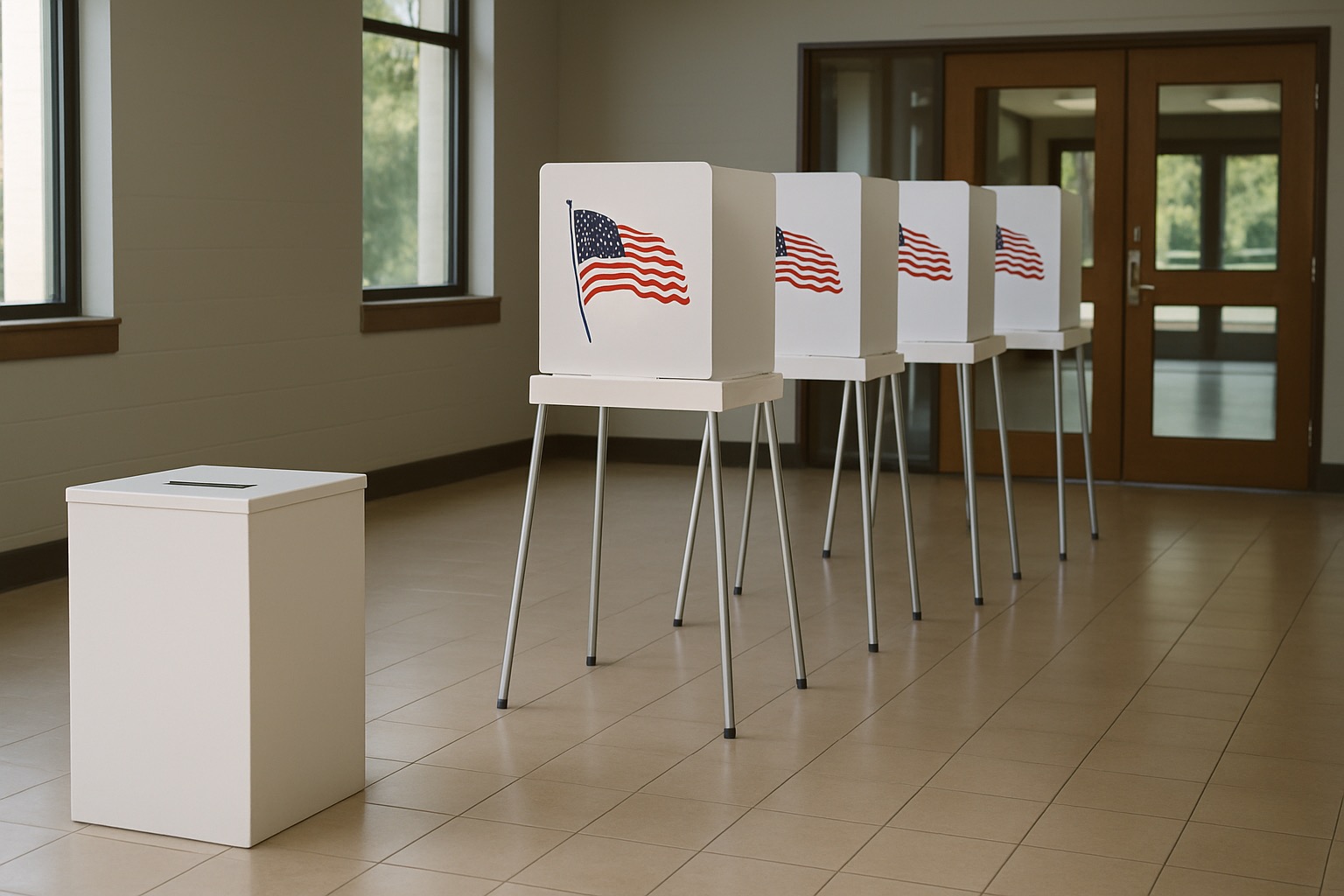
Two Republican nomination contests — one to fill a Senate seat left empty by sudden death, the other to pick a governor in a state that voted Republican by more than 30 points in 2024 — share an August 25 runoff date. Neither general election is competitive. But both races are live laboratory tests of one of the defining questions of the 2026 midterm cycle: how much is a Trump endorsement actually worth when Republican voters are choosing among themselves?
The dynamics could not be more different. In South Carolina, Trump's pick has money, party infrastructure, and name recognition — but she stumbled badly in her only debate, generating national headlines the morning early voting opened. In Oklahoma, Trump's pick is running roughly even with a rival who has outspent him and is daring voters to measure conservative loyalty by something other than a Truth Social post.
Both outcomes will be decided by who shows up on a Tuesday in late August. Here is what you need to know.
South Carolina: The Seat That Changed Overnight
For 22 years, Lindsey Graham defined the Senate seat he held for South Carolina. When he died suddenly on July 11, 2026, from a torn aorta — less than six weeks after winning his own Republican primary — the state was left without a nominee for one of its most reliably Republican seats.
Gov. Henry McMaster moved within three days. On July 14, he appointed Darline Graham, Lindsey's younger sister, to serve the remainder of the term. By July 20, she had announced her run for the full six-year seat, with President Trump's endorsement in hand.
A crowded field scrambled to catch up. Rep. Russell Fry, a Myrtle Beach-area congressman, entered. Former Gov. Mark Sanford, who had spent years in political exile after a high-profile 2009 scandal and a subsequent break with Trump, saw an opening. Rep. Ralph Norman, the Freedom Caucus vice chairman who had just failed to break through in the governor's race earlier in the year, jumped in as well. By primary day on August 11, ten names were on the ballot.
The result: Darline Graham led with 32.7 percent (109,881 votes), Norman placed second at 24.6 percent (82,627), Fry ran third at 19.7 percent (65,955), and Sanford pulled 14.9 percent (50,136), per South Carolina Election Commission data. No candidate cleared 50 percent. Under state law, the top two advance to a runoff.
Turnout was anemic. Fewer than one in nine of the state's 3 million-plus eligible voters cast a ballot, according to The Center Square — a reality that makes August 25 as much a turnout operation as a persuasion contest.
The Geographic Fault Lines
Graham's coalition is coastal and suburban South Carolina. She swept the Lowcountry — winning Beaufort County by 26 points, Jasper by 37, Colleton by 16 — and ran up large margins through the Midlands: Lexington +20, Richland +17, Aiken +20, per NYT county results. She held Charleston by 3 points, the largest coastal county.
Norman's strength is the Upstate, the counties that have moved furthest toward hard-line conservatism: Greenville +17, Spartanburg +14, York +22, Anderson +3. That is the geographic base of South Carolina's Freedom Caucus wing.
Fry's voters, concentrated in the Grand Strand around Horry County (where Fry won by 7), are now the critical swing bloc. Fry endorsed Graham before the runoff, which could consolidate her Lowcountry-Midlands coalition if his voters follow. Whether they do — especially after the August 18 debate — is the central uncertainty of the race.
The Debate: A Stumble That Reshaped the Race
The only scheduled head-to-head debate between Graham and Norman took place Tuesday evening, August 18, at the historic Newberry Opera House, hosted by the South Carolina Republican Party with Newsmax and SCETV, moderated by Greta Van Susteren. It aired the night before early voting opened.
For most of the debate, the two candidates traded predictable Republican applause lines — support for prosecuting Anthony Fauci, cutting the national debt, restricting immigration. Graham attacked Norman's congressional record; Norman questioned Graham's readiness. The atmosphere was tense but civil.
Then came the Taiwan question.
Van Susteren asked whether Taiwan and the South China Sea represented national security issues for the United States. Norman offered a fluent, direct answer about Taiwan's economic and strategic importance. Graham paused.
"I'm just going to be honest here. I'm not that informed on national security," she said, adding: "But I do support the military."
The audience — described by The State newspaper as "somewhat evenly split" between the two candidates' supporters — responded audibly. Norman later told reporters: "She's running for the United States Senate. You need to get fully versed in what issues you're going to be dealing with." The New York Times called it "a major gaffe" that "showcased Ms. Graham's inexperience." NBC News reported she spent part of the post-debate spin room on defense, arguing that honesty about knowledge gaps is itself a form of leadership.
Graham did have her moments. In her closing statement, she accused Norman of serial career uncertainty — noting his governor's run, his return to the Senate race — and landed the sharpest line of the night: "I've done more in 20 days than you've done in 20 years." She also drew a contrast on Trump's reconciliation bill, arguing Norman had delayed it before Trump personally called him to secure his vote. Norman said he had used the leverage to strip out electric vehicle and solar subsidies — and that Trump agreed the result was worth the delay.
A separate debate flashpoint: Norman highlighted that a progressive clean-energy political action committee, the Invest in Tomorrow Coalition, has committed $1 million in outside advertising against him and in favor of Graham, per reporting from WIS TV — suggesting, without offering direct evidence, that interests outside the Republican base are investing in Graham's nomination. Graham rejected the framing.
In an Associated Press interview published August 18, Norman called Trump's endorsement of Graham a "head scratcher" given his own consistent voting record in line with Trump's priorities. Norman noted — though not during the debate itself — that he had backed former Gov. Nikki Haley over Trump in the 2024 Republican primary.
What the Market Says
No prediction market for the South Carolina Republican Senate special primary runoff is available from our data sources at this time. The November general election winner market tracks the seat’s partisan outcome.
The winner of August 25 faces Democratic nominee Dr. Annie Andrews, a Charleston pediatrician, in November. South Carolina has not elected a Democrat to the Senate since 2004, when Ernest Hollings retired. Every major forecaster rates the November general as Safe Republican.
Oklahoma: The Closest Thing to a Coin Flip in a Deep-Red State
Oklahoma's Republican governor's runoff is, by almost every available measure, a dead heat.
The June 16 primary results were nearly designed to produce drama: Attorney General Gentner Drummond finished first with 26.3 percent (105,832 votes), former state Sen. Mike Mazzei placed second at 26.0 percent (104,691) — a margin of 1,141 votes out of 403,099 cast, per NBC News election data. Neither man was close to 50 percent in a nine-candidate field.
Drummond is a rancher and attorney from Hominy with a background in state regulation and the current AG's office. He entered the race as the presumptive frontrunner, carrying endorsements from much of the traditional Republican establishment and polling at 48 percent in early 2025 surveys before serious opposition materialized.
Mazzei is a Tulsa financial planner and former state senator who served as budget secretary under Gov. Kevin Stitt. He received Trump's endorsement in the final days before the primary — a post on Truth Social that may have been the difference between a second-place finish and a fourth-place finish.
Trump vs. the Traditional Republican Wing
The runoff is widely described as a proxy contest between Trump's MAGA-aligned wing and Oklahoma's traditional Republican establishment. The most recent independent polling — conducted by CHS & Associates, the firm of longtime Oklahoma pollster Pat McFerron — found the race at 44-44 among likely Republican runoff voters, with 12 percent undecided.
"It's just an incredibly close race right now," McFerron told KFOR. "This is all about turnout in the election."
The CHS survey, conducted August 2-4 around the time of the August 3 statewide debate, found that the debate itself moved numbers: Mazzei led among voters interviewed before it; Drummond led by one point among voters interviewed after. Women shifted five points toward Drummond following the debate. A separate Pulse Decision Science survey conducted the same August 2-4 window found Mazzei at 44, Drummond at 38, with 18 percent undecided.
The ideological self-identification breakdown is instructive. More than half of likely Republican runoff voters — 56 percent — described themselves to CHS as "traditional Republicans," versus 38 percent who called themselves "Trump Republicans," per KFOR's reporting. Among the traditional cohort, Drummond leads 60-40. Among Trump Republicans, Mazzei leads 62-38. Neither margin is decisive on its own; the outcome depends entirely on whose coalition turns out.
Trump has not been subtle about his preference. He posted on Truth Social calling Drummond a "FAKE Republican" and Mazzei a "MAGA Warrior" with his "COMPLETE and TOTAL Endorsement," per The Hill. That same Hill report noted that four of 12 Trump endorsees in open governor's races have lost so far in the 2026 cycle, citing Decision Desk HQ tracking.
From among eliminated primary candidates: Jake Merrick (fourth place, 58,341 votes) endorsed Mazzei, appearing on his podcast and campaign. Chip Keating (third place, 74,379 votes) expressed concerns about both candidates without endorsing either, per KOCO. Former candidate Leisa Mitchell Haynes expressed support for Drummond.
The Inola Smelter and the Policy Fault Line
The race has a genuine policy argument at its center. A proposed aluminum smelter in Inola has become the single most-discussed economic development project in the state. Mazzei supports it, arguing the investment would bring manufacturing jobs and industrial revenue to Oklahoma. Drummond filed a preliminary injunction to block it, citing environmental concerns and the energy cost burden the project would place on the state's electricity grid, per Public Radio Tulsa.
"He was stunned his Republican opponent would resist the smelter's potential financial benefits," Public Radio Tulsa reported of Mazzei's reaction. The smelter divide has complicated the traditional-versus-MAGA framing, cutting across both coalitions in ways that resist easy characterization.
Additional controversies in the race's closing days: Audio circulated of Drummond allegedly telling an audience that he opposed voter ID ballot measures and encouraged Democrats to vote against them; Drummond's campaign called the clips deceptive and out of context. Separately, Drummond took a hair follicle drug test and publicly challenged Mazzei to match it; Mazzei took a urine test that returned negative; Drummond's campaign argued the two testing methods are not equivalent, with hair testing detecting substance use over a significantly longer window, per Radio Oklahoma News and expert comment from National Drug Screening president Joseph Reilly.
No election prediction market for the Oklahoma governor's runoff is available from our data sources at this time. The winner of August 25 faces Democrat Cyndi Munson in November — a contest every major forecaster rates as safely Republican.
The November Stakes
South Carolina's Senate seat is Safe Republican regardless of who wins Tuesday. Oklahoma's governor's mansion has been Republican since 2011. The August 25 outcomes will not alter the competitive landscape of November.
But the symbolic stakes are real. Oklahoma offers another data point on Trump's endorsement record in the 2026 midterms. South Carolina tests whether appointed senators with famous last names and presidential backing can survive a compressed runoff campaign against opponents willing to prosecute an experience argument in real time.
Nationally, control of the Senate remains a genuine coin flip entering the fall. That question will be settled by competitive general elections in states like Michigan, Montana, Texas, Iowa, and Alaska — not by either of Tuesday's runoffs.
August 25 will be decided by a fraction of the electorate that showed up in primary season. In South Carolina, the three-day early voting window running through Friday is the first real signal of which candidate's ground game is delivering. In Oklahoma, the gap between 56 percent of voters calling themselves traditional Republicans and 38 percent calling themselves Trump Republicans suggests the race is Drummond's to lose — if his voters show up at the same rate as Mazzei's.
Both outcomes will be known by Tuesday night.
Sources
- Associated Press — Ralph Norman interview on Trump endorsement (Aug. 18, 2026) — apnews.com
- The New York Times — Debate coverage, Taiwan gaffe (Aug. 18–19, 2026) — nytimes.com
- Roll Call — Graham-Norman runoff setup, Trump endorsement context (Aug. 11–14, 2026) — rollcall.com
- The State (Columbia, S.C.) — Five takeaways from the GOP Senate debate (Aug. 19, 2026) — thestate.com
- South Carolina Public Radio — Debate recap; AP Norman interview re-publish (Aug. 19, 2026) — southcarolinapublicradio.org
- WIS TV / WBTV — Runoff voter guide, debate recap, Invest in Tomorrow PAC (Aug. 18–19, 2026) — wistv.com / wbtv.com
- NBC News — Graham debate defense; primary results data (Aug. 19, 2026) — nbcnews.com
- USA Today — Debate coverage, candidate positions (Aug. 18–19, 2026) — usatoday.com
- The Center Square (South Carolina) — Voter turnout, runoff calendar (Aug. 17, 2026) — thecentersquare.com
- KFOR (Oklahoma City) — CHS/McFerron independent poll; debate analysis (Aug. 13–14, 2026) — kfor.com
- The Hill — Trump attacks Drummond; Trump endorsee win-loss record (Aug. 18, 2026) — thehill.com
- News on 6 (Tulsa) — Drummond-Mazzei-Munson forum (Aug. 14, 2026) — newson6.com
- KOCO (Oklahoma City) — Former candidate endorsements (Aug. 19, 2026) — koco.com
- Public Radio Tulsa / KWGS — Inola smelter, forum recap (Aug. 18, 2026) — publicradiotulsa.org
- KGOU (Oklahoma public radio) — Campaign spending, endorsements (Aug. 19, 2026) — kgou.org
- Oklahoma Voice — Campaign spending analysis (Aug. 18, 2026) — oklahomavoice.com