
Florida Senate Special Election 2026: Ashley Moody, Alex Vindman, and the Fight for Marco Rubio's Seat
A complete guide to Florida's 2026 Senate special election, including candidate profiles, fundraising data, polling, and what the race means for Senate control.
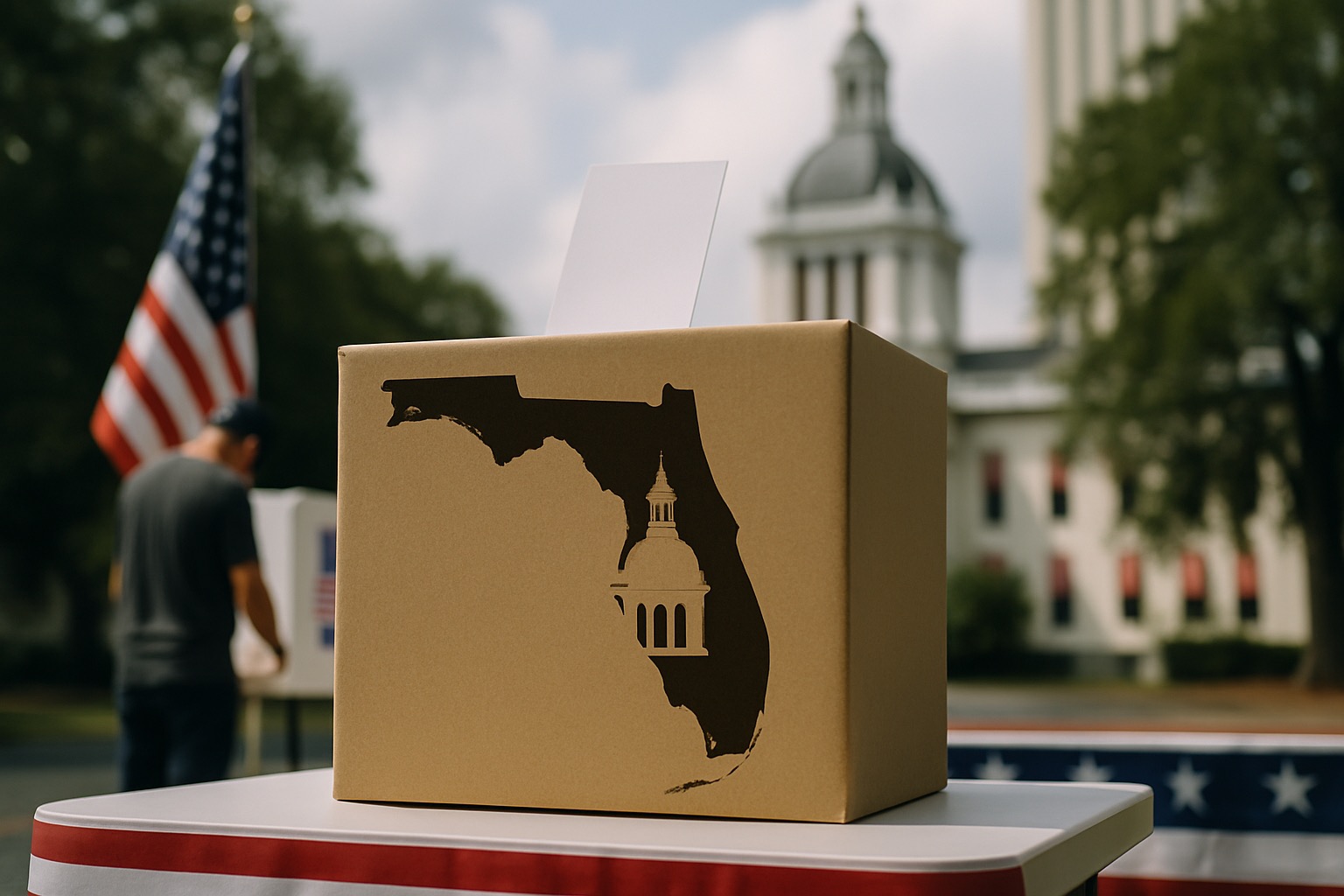
One week from today, Florida holds the first U.S. Senate primary in the state since 1936 — a fact that alone tells you something about how unusual this race is. On August 18, both parties pick their nominees for a special election to fill the remaining term of Marco Rubio, who left the Senate in January 2025 to become Secretary of State. The general election follows on November 3.
On the Republican side, appointed incumbent Ashley Moody is expected to coast. On the Democratic side, retired Army Lieutenant Colonel Alex Vindman — who became a national figure when he testified in Donald Trump's first impeachment trial in 2019 — has outspent and out-organized his primary rival, state Rep. Angie Nixon, by a margin of more than 20 to one. The general election contest that prediction markets and forecasters expect to follow: Moody vs. Vindman, in a state Trump carried by 13 points two years ago, is considerably tighter than the partisan math alone would predict.
How This Race Came to Be
Marco Rubio won his third Senate term in November 2022, defeating Democrat Val Demings by nearly 16 points. He was set to serve through January 2029. When President Donald Trump named him Secretary of State in late 2024, Rubio resigned the seat he had won so decisively, and Governor Ron DeSantis moved quickly to fill it.
On January 16, 2025, DeSantis appointed Ashley Moody, then Florida's 38th Attorney General, to hold the seat. Under Florida law, when a U.S. Senate vacancy occurs, the governor appoints a temporary replacement who serves until the next general election cycle — in this case, November 3, 2026. The winner of that race completes the remaining two-plus years of Rubio's original term, serving through January 3, 2029.
That compressed timeline matters for both parties. Democrats see a two-year window — a lower-stakes entry point — as potentially more winnable than a full six-year race would be. Republicans see it as a critical defense: Florida is part of the firewall that keeps their Senate majority intact.
The Republican Picture: Moody's Primary Is Not the Story
Ashley Moody, 51, is the overwhelming favorite in Tuesday's Republican primary. She is a fifth-generation Floridian from Plant City, a former federal prosecutor in Jacksonville and Tampa, a circuit court judge, and the two-term attorney general who left that office to accept DeSantis's appointment to the Senate. President Trump endorsed her for the seat, effectively clearing the field of credible challengers.
Three Republicans joined the primary ballot — technology consultant Chris Gleason, physician Neelam Taneja Perry, and Reverend Ernest Rivera — but none registered meaningful fundraising or polling support. Moody has raised $10.8 million for her official campaign account, with more than $14 million across all associated committees, according to Federal Election Commission records. She entered the final stretch before the primary with $8.4 million in cash on hand as of the end of the second quarter.
Her campaign platform centers on law enforcement and border security, drawing on her biography as a prosecutor, judge, and attorney general. In the Senate, she pointed to her work on the HALT Fentanyl Act and says she has helped secure more than $1.7 billion in disaster recovery funding for Florida. She has consistently positioned herself as aligned with the Trump administration's priorities — a posture that carries low risk in a Republican primary in Florida and serves as a contrast she plans to draw against whichever Democrat emerges from Tuesday's primary.
The Democratic Primary: An Asymmetric Contest
The Democratic primary is where the action is — and the financial asymmetry between the two candidates makes it one of the most lopsided primaries on the 2026 Senate map.
Alex Vindman entered the race on January 27, 2026, and raised $1.7 million on launch day alone, a record for a first-day Senate fundraising haul in Florida, according to his campaign and confirmed in subsequent Federal Election Commission filings. He raised $8.2 million in the first quarter of 2026 and $8.5 million in the second quarter — totaling more than $14.4 million in his official campaign account through June 30, with approximately $16.7 million across all committees, per Tampa Bay Times reporting on the Q2 finance reports. He ended the second quarter with $7.3 million in cash on hand. By early August, his campaign reported more than $10 million in cash across all accounts, though his pre-primary FEC filing put his main campaign at approximately $7.25 million, according to Florida Politics.
Ninety-eight percent of Vindman's contributions have come from donors giving under $200. His campaign has accepted no corporate PAC money. The average contribution is approximately $35.
Vindman is 50 years old and retired as a Lieutenant Colonel after a 21-year Army career. He served as the National Security Council's Director for European Affairs during the Trump administration and became a central figure in the first impeachment when he reported concerns about a call between Trump and Ukrainian President Volodymyr Zelensky to his superiors, then testified before the House Intelligence Committee. He was removed from his NSC post days after testifying. He moved to Florida roughly three years ago and launched his Senate campaign in January 2026.
His opponent, state Rep. Angie Nixon, represents Jacksonville in the Florida House and has aligned herself with the progressive wing of the Democratic Party. Her campaign has raised approximately $625,000 total, per FEC data, and she entered the final weeks before the primary with roughly $118,000 in cash. She has positioned herself as the Florida-rooted candidate focused on working-class issues, and has criticized Vindman's associations with the national Democratic establishment. Vindman, for his part, attacked Nixon's ties to the Democratic Socialists of America — a line of argument that has also appeared in Republican messaging previewing a general election contrast.
The fundraising gap — roughly 25 to one on an individual campaign basis — has effectively made this a one-candidate primary. Vindman has run statewide television and digital advertising. Nixon has not had the resources to do the same.
General Election: Tighter Than the Partisan Lean Would Suggest
Florida voted for Trump by 13 points in 2024. Its voter registration rolls lean Republican. No Democrat has won a Florida Senate race since Bill Nelson in 2012. The structural environment is clear.
The polling environment is more complicated.
The University of North Florida's Public Opinion Research Lab surveyed 848 likely Florida midterm voters from July 8 through July 17 and found Moody leading Vindman 50 percent to 40 percent — a 10-point gap. A Global Strategy Group poll of 1,000 likely voters conducted for Democratic interests in May found Moody ahead 46 to 43, a three-point margin. A March poll by MDW, also conducted for Democratic interests, showed a single-percentage-point race: Moody 43 percent, Vindman 42 percent. Emerson College's late March survey of 1,125 likely voters found Moody at 46 percent and Vindman at 38 percent. Stetson University's spring poll had Moody at 49, Vindman at 42.
Decision Desk HQ's polling average through early August showed Moody leading Vindman 47 to 40. The range of polling outcomes — from a single point to 10 points — reflects both genuine uncertainty about a race with unusual characteristics and the inevitable spread between partisan pollsters with different methodological choices.
Several dynamics are shaping the polling gap, and the gap between the polls and the partisan baseline:
Nationalization vs. Florida-specific headwinds. Vindman's profile — a retired military officer, a government whistleblower with a direct personal history involving Trump — has generated the kind of national fundraising energy that few Florida Democrats have ever accessed. That same profile also gives Republicans a ready-made general election argument about out-of-state money funding a candidate whose political identity was formed in opposition to a president many Florida Republicans still support. Moody's campaign has already begun making this case.
The special election frame. Because this race covers only the unexpired portion of Rubio's term, turnout patterns may differ from a standard November general election. Democrats historically perform better in special elections in competitive states when they have an energized national donor base and a clear motivating contrast. Republicans counter that Florida's political infrastructure and voter registration advantage are durable assets regardless of election type.
Moody's stock trading scrutiny. Vindman's campaign has attacked Moody's investment activity while serving in the Senate — a line of attack that has also drawn coverage in Florida media. Moody has not publicly addressed those attacks in detail.
The insurance and housing crisis. Florida's property insurance market has been in distress for several years, with rates rising sharply and insurers exiting the state. Housing costs in major Florida metros have risen substantially. Both issues poll as top concerns for Florida voters, and both candidates have staked out distinct positions. Democrats believe these kitchen-table issues can cut across partisan lines in an open-seat special election.
Forecaster Ratings and Market Context
Major race-rating outlets are not treating Florida as safe Republican territory. Cook Political Report, Sabato's Crystal Ball, and Inside Elections have assessed the race as Likely Republican or Lean Republican — not Solid Republican — acknowledging that the combination of an unusual special election frame, an energized Democratic candidate, and a political environment that has shown volatility at the state level warrants caution.
Decision Desk HQ estimated as of early August that Republicans hold approximately a 4-in-5 probability of retaining the seat. The same outlet noted that a Democratic flip in Florida would give Democrats an approximately 84 percent chance of capturing the Senate majority — making this race, if it stays competitive, one of the more consequential bets on the 2026 map.
Prediction markets are tracking the Florida Senate race directly. The consensus across major U.S. prediction markets:
The Florida Senate outcome is one of the seats that could shift the broader balance of power. Prediction markets currently price Republicans at 51 percent to retain Senate control, Democrats at 47 percent. Senate control:
The overall balance-of-power market — tracking whether either party sweeps both chambers — is pricing a Democratic sweep at 46 percent, a split outcome with Democrats holding the House and Republicans the Senate at 40 percent, and a Republican sweep at 13 percent.
What to Watch on August 18 and Beyond
The primary results next Tuesday will set the general election frame. On the Republican side, Moody's margin over token opposition will be closely watched as a measure of any residual dissatisfaction with an appointed incumbent. On the Democratic side, Vindman's primary performance will signal whether his small-donor, nationalized fundraising base has translated into Florida voter support — or whether Nixon's on-the-ground organizing has built more of an undercurrent than the money gap suggests.
If Vindman wins convincingly, expect a general election framed around his impeachment testimony, his out-of-state donor base, and his Cuba policy positioning on one side, and his fundraising edge, the housing-insurance-cost nexus, and the broader anti-Trump midterm environment on the other. The race is scheduled for November 3, 2026 — the same day as Florida's gubernatorial contest featuring Byron Donalds against David Jolly, adding another layer of Republican-vs.-Democrat statewide dynamics to the state's political calendar.
Florida's first Senate special election in 90 years is also, by every measure, its most expensive and most closely watched. Whether that translates into the first Democratic Senate win in the state in more than a decade is the question the market is still pricing out.
Frequently Asked Questions
Why is there a Florida Senate special election in 2026?
Marco Rubio resigned from the Senate in January 2025 to become Secretary of State in President Donald Trump's second administration. Governor Ron DeSantis appointed former Florida Attorney General Ashley Moody to temporarily fill the seat. Under Florida law, the appointee serves until the next general election, when voters choose who will complete the unexpired term — in this case through January 3, 2029.
When is the Florida Senate primary in 2026?
The primary is August 18, 2026. Both parties hold closed primaries — only registered Republican voters may vote in the Republican primary, and only registered Democrats in the Democratic primary. The general election is November 3, 2026.
Who is Ashley Moody?
Ashley Moody is Florida's appointed U.S. senator and the Republican nominee for the special election. She previously served two terms as Florida's attorney general and earlier as a federal prosecutor and circuit court judge. She is from Plant City, Florida, and is a fifth-generation Floridian. President Trump endorsed her for the seat.
Who is Alex Vindman?
Alex Vindman is a retired Army Lieutenant Colonel who served on the National Security Council as Director for European Affairs. He testified in the first impeachment trial of President Donald Trump in 2019 after reporting concerns about a call between Trump and Ukrainian President Zelensky. He moved to Florida approximately three years ago and launched his Senate campaign in January 2026. He is the leading Democratic candidate by fundraising.
Who is the favorite to win Florida's Senate race?
Major forecasting outlets rate the race Likely Republican or Lean Republican. Most publicly available polling shows Moody ahead, though the margin ranges from one to ten points across different surveys. Florida voted for Trump by 13 points in 2024. The race is more competitive than a simple partisan-lean calculation would suggest, but Republicans enter as clear favorites.
Sources
- Ballotpedia, "Ashley B. Moody" candidate profile — ballotpedia.org
- Ballotpedia, "2026 United States Senate special election in Florida (August 18 Democratic primary)" — ballotpedia.org
- Federal Election Commission, "Alex Vindman for Florida" committee summary (coverages through Q1 2026) — fec.gov
- Federal Election Commission, "Vindman, Alexander" candidate overview — fec.gov
- Tampa Bay Times, "Alex Vindman outraises Moody again this quarter for Senate bid" (July 16, 2026) — tampabay.com
- Tallahassee Democrat, "Vindman raises $1.7 million first day of Florida US Senate bid" (Jan. 28, 2026) — tallahassee.com
- Politico, "Vindman raises $8.2M for Democratic Florida Senate bid" (April 1, 2026) — politico.com
- Courthouse News Service, "Florida's Democratic Senate primary pits progressive against Trump impeachment witness" (Aug. 5, 2026) — courthousenews.com
- WFLA (NBC Tampa Bay), "Who will take on Ashley Moody? Florida Democrats make their case" (July 27, 2026) — wfla.com
- Sun Sentinel editorial, "The Florida Senate race is all about Trump" (Aug. 8, 2026) — sun-sentinel.com
- Florida Phoenix, "Moody leads Nixon by 8 points, Vindman by 10, in new poll of Florida Senate race" (July 20, 2026, citing University of North Florida Public Opinion Research Lab survey, July 8–17, 2026) — floridaphoenix.com