

Maine Senate Dips to 64¢: Jackson vs. Collins Enters Its Final 100-Day Sprint
Maine Senate dips to 64¢ Democratic as Jackson faces Collins' $16M war chest and a Senate Leadership Fund pledge of $42M+ with 100 days to November.
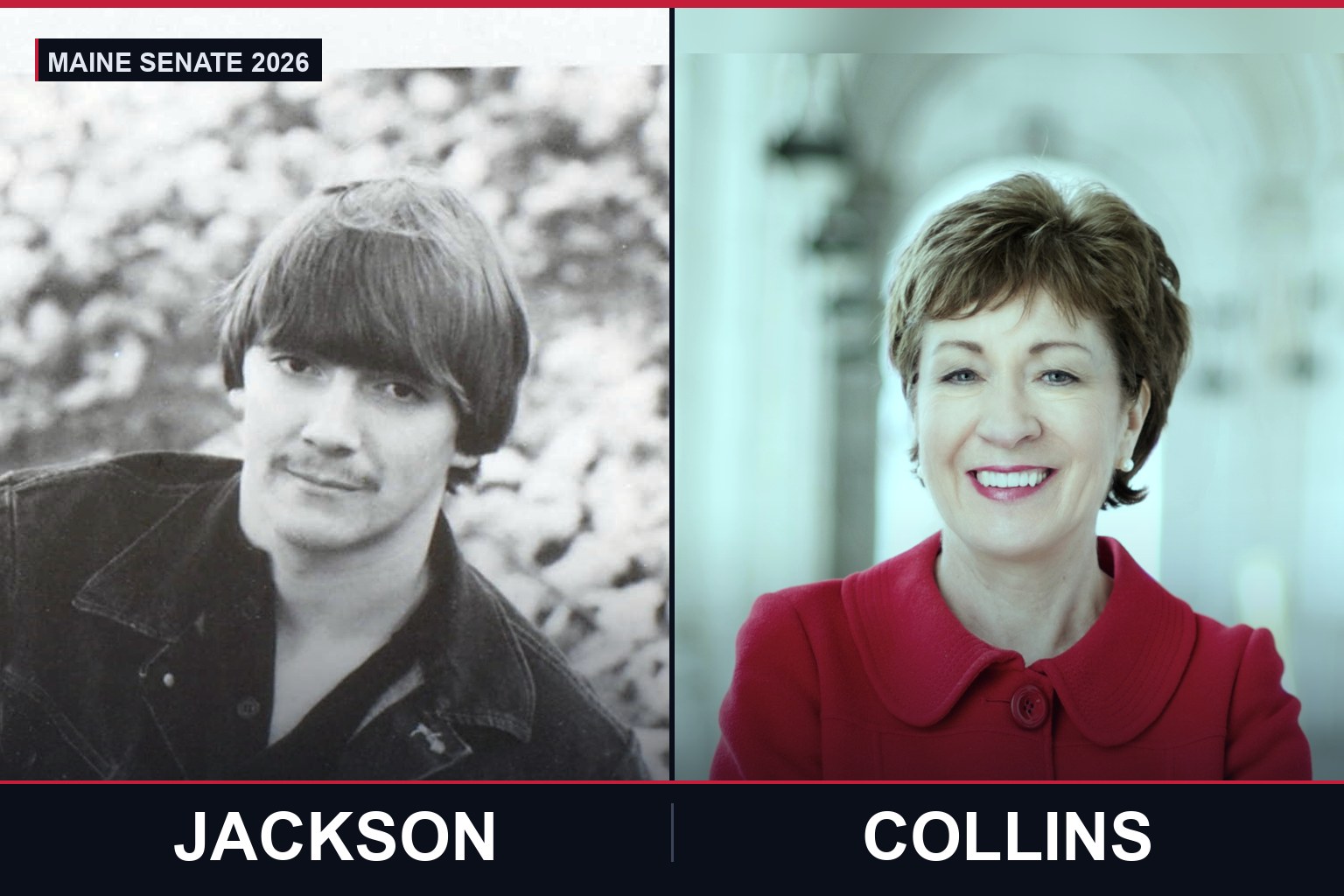
The Maine Senate market has ticked down two cents — sitting at 64 cents for the Democratic candidate as of this evening, down from 66 cents this morning — as Troy Jackson's campaign enters its first full week as nominee with Collins' allies having already opened fire.
The move is small. But the 64-cent reading reflects a market genuinely wrestling with an unusual combination: a challenger who leads in current polling, a grassroots base that demonstrated real organizational strength, and a structural deficit in time, money, and name recognition that the market hasn't written off.
The Price and the Race
Cross-platform consensus pricing: 64 cents Democratic (Jackson), 35 cents Republican (Collins), on $4.77 million in combined volume across Kalshi, Polymarket, and PredictIt.
Polling gives Jackson a real opening. A University of New Hampshire Survey Center poll conducted July 15–20 (n=1,236, margin of error ±2.8 points) found Jackson leading 49 percent to 46 percent — a statistical tie, but one in which the challenger is ahead. The polling average across surveys gives Jackson roughly a 2.8-point edge.
The 64-cent price is not skepticism about the polling. It's a discount for everything the polling doesn't capture yet.
Collins' Machine vs. Jackson's 100 Days
Susan Collins is seeking a sixth term. She has raised more than $16 million this cycle, per Federal Election Commission records. The Senate Leadership Fund, the top Senate Republican super PAC, pledged to spend at least $42 million in the race, per Reuters — and launched its first ad the day Jackson won the Democratic nomination.
Jackson, a 58-year-old fifth-generation logger and former Maine Senate president from Allagash, had raised more than $1 million since entering the Senate contest, per Reuters. He was nominated July 25, winning 566 of 571 delegate votes at a Bangor special convention, replacing Graham Platner, who withdrew after a sexual assault allegation he has denied. Jackson launched his first general-election television ad Aug. 1, backed by a seven-figure statewide buy, per Quartz.
Collins' campaign attacked the process immediately after the convention, calling Jackson "a 24-year Augusta insider appointed to run for the Senate by fewer than three-tenths of one percent of its primary voters." The National Republican Senatorial Committee released video the day of Jackson's nomination, and the Senate Leadership Fund launched a six-figure initial ad campaign with a pledge of much more to come.
What the Market Is Weighing
Jackson has a base to build from. More than 17,000 voters participated in county-level delegate elections before the convention, per The Guardian — a sign of real organizing beneath the surface of a messy primary. Former Vice President Kamala Harris endorsed him. The broader Democratic midterm energy, running against the backdrop of an incumbent president's first two years, is real.
But Collins has outlasted tougher environments. She won reelection in 2020 during a national Democratic wave year. Her support among Maine independents — the voters who decide Senate races in a state that doesn't reliably choose one party — is deep. The same UNH poll found independents splitting 46 percent Jackson to 42 percent Collins.
Maine uses ranked-choice voting in the general election, which could matter in a tight finish. And the race began with Jackson needing to introduce himself statewide while Collins has held the seat for nearly three decades.
The 64-cent price is the market's synthesis: a live race with a credible Democratic challenger carrying a polling edge, priced with appropriate weight on the structural advantages a well-funded 30-year incumbent brings into a 100-day sprint.
The Signals to Watch
Two concrete data points will reprice this market. First: Jackson's fundraising totals in his first FEC report post-nomination — showing whether his initial haul has scaled into a real general-election operation. The $15 million fundraising gap is the clearest measurable disadvantage he faces. Second: polling in rural and northern Maine, where Platner had invested heavily in grassroots organizing and where Jackson's name recognition is lowest.
If Jackson can consolidate Platner's rural base while holding Portland-area Democrats and closing on independents, the 64-cent market price may look conservative. If Collins' ad spending and the legitimacy attacks gain traction with undecided Republicans and independents, the drift downward from 66 cents could continue.
For now, 64 cents says the market believes it's a real race — just not a toss-up.
Sources: The Guardian / theguardian.com (July 25 and Aug. 1, 2026); The New York Times / nytimes.com (July 26, 2026); WABI / wabi.tv (July 27, 2026); Spectrum News / spectrumlocalnews.com (July 22, 2026); Quartz / qz.com (Aug. 1, 2026); Reuters (via Quartz: Senate Leadership Fund pledge; Jackson fundraising). Market data from cross-platform consensus pricing (Kalshi, Polymarket, PredictIt).