

Four Polls, Four Double-Digit Leads — So Why Is Michigan Stuck at 94¢?
The latest Emerson survey has El-Sayed up 15 points. The market agrees he wins Tuesday. But 94¢ isn't 99¢ — and the gap tells the real story.
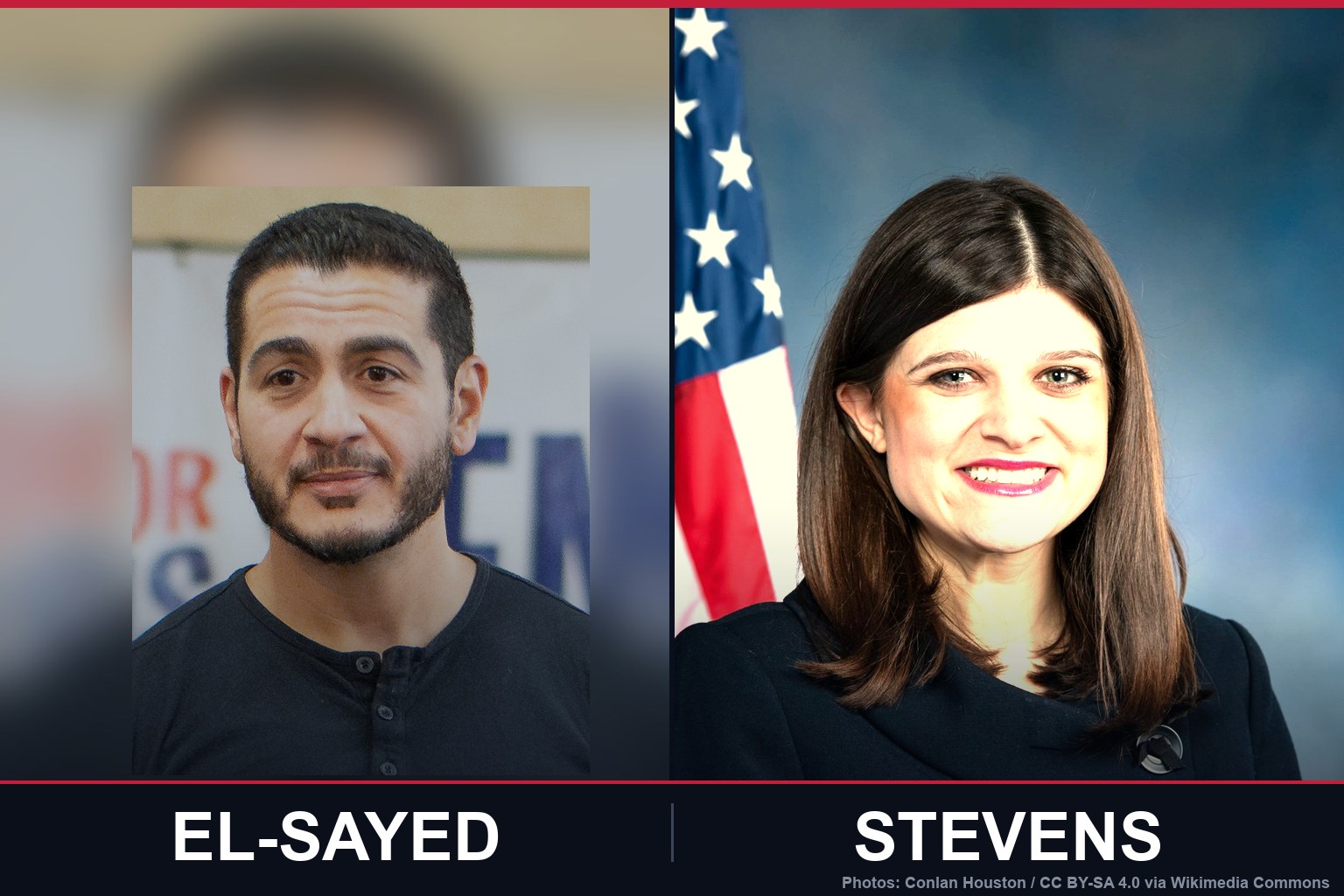
The latest survey of Michigan's Democratic Senate primary dropped Thursday morning, and it reads like more of the same: Abdul El-Sayed leading Rep. Haley Stevens by 15 points, 54% to 39%, with the August 4 primary five days out. The Emerson College Polling/WLNS/WOODTV survey of 700 likely Democratic primary voters, conducted July 26–27, shows El-Sayed's margin stretching to 16 points (57% to 41%) when undecided voters are pressed to lean. It is the fourth consecutive poll showing him with a double-digit primary advantage.
By conventional measure, this race should look settled.
The market hasn't gotten that memo — not entirely.
The cross-platform consensus as of Thursday morning: El-Sayed 94¢ / Stevens 6¢, on $6.76 million in combined volume across Kalshi, Polymarket, and PredictIt. The market is not confused about who wins. It just isn't pricing him at 99¢.
The six-cent gap is where the political story lives.
The Age Divide and the Black Voter Problem
The Emerson survey illuminates the structural tension underneath El-Sayed's headline number. He dominates voters under 50 by enormous margins — up 42 points among that cohort. But voters 60 and older flip to Stevens, 53% to 39%, and older Democrats turn out at higher rates in primaries.
The more significant data point: Stevens leads El-Sayed among Black voters, 63% to 33%. When undecided Black voters are factored in, Stevens' advantage widens to 30 points. Black voters make up roughly one-fifth of Michigan's Democratic primary electorate. For a candidate whose core message centers on community health and coalition-building, that gap is a concrete structural liability — one the primary polling aggregates can't fully obscure.
The Glengariff Problem
What the market is really pricing is November, not August.
A Michigan Education Survey conducted by the Glengariff Group — commissioned by the Michigan Education Association and Business Leaders for Michigan and released July 28 — showed former Rep. Mike Rogers beating El-Sayed by 10 points in a hypothetical November matchup, with 11% of respondents undecided. The same survey found Stevens effectively tied with Rogers, 46% to 45%, within the poll's 4-point margin of error.
Among independent voters, the spread is more pronounced: Rogers leads El-Sayed among independents by 28 points. Stevens and Rogers are near-tied in that same group.
Cook Political Report rates the open Michigan seat a toss-up. If Democrats send El-Sayed into that toss-up, the Senate control market — currently at 56¢ GOP / 44¢ Dem — is watching. A general-election drag in Michigan's most competitive race of the cycle is a repricing event for every dollar sitting on Democratic Senate control.
The Whitmer Slide
One Emerson finding that flew somewhat under the radar: Gov. Gretchen Whitmer's job approval among Democratic primary voters has dropped from 79% in April to 62% now — a 17-point slide since she endorsed Stevens. Among those who approve of Whitmer, Stevens leads El-Sayed 49% to 42%. Among those who disapprove, El-Sayed leads 78% to 17%.
Whitmer's endorsement was intended as a finishing blow for the establishment lane. Instead, her declining approval among the primary electorate has muted its impact considerably.
What 94¢ Is Actually Saying
A 94-cent probability on El-Sayed is not market skepticism about Tuesday's outcome. It is a compact, probabilistic acknowledgment that primaries carry tail risk: polls have been wrong before, $30-plus million in outside spending against a single candidate occasionally lands, and the demographics of who actually shows up on August 4 may not perfectly match the likely-voter screens in Emerson's model.
The market is not confused. It is pricing a 6% tail. Given the Glengariff general-election data, the age and demographic fault lines, and the scale of institutional opposition El-Sayed has absorbed, a six-cent residual is not irrational. It's calibrated.
Tuesday will tell us whether 94¢ was right to leave those six cents on the table.
The Michigan Democratic Senate primary is August 4. Early voting runs through August 2.
Sources
- The Hill / Emerson College Polling (July 30, 2026): https://thehill.com/homenews/campaign/5997606-el-sayed-leads-stevens-michigan-senate-poll/
- Emerson College Polling release (July 30, 2026): https://emersoncollegepolling.com/michigan-2026-poll-abdul-el-sayed-leads-haley-stevens-for-democratic-us-senate-nomination/
- WLNS 6 News (July 30, 2026): https://www.wlns.com/your-local-election-hq/el-sayed-leads-michigan-democrats/
- The Hill / Glengariff Group (July 28, 2026): https://thehill.com/homenews/campaign/5994700-rogers-el-sayed-stevens-michigan-senate-poll/