

El-Sayed's 86¢ Primary Surge Comes With a November Price Tag
El-Sayed hits 86¢ in Michigan's Democratic Senate primary — but independent general-election polling shows a different November picture.
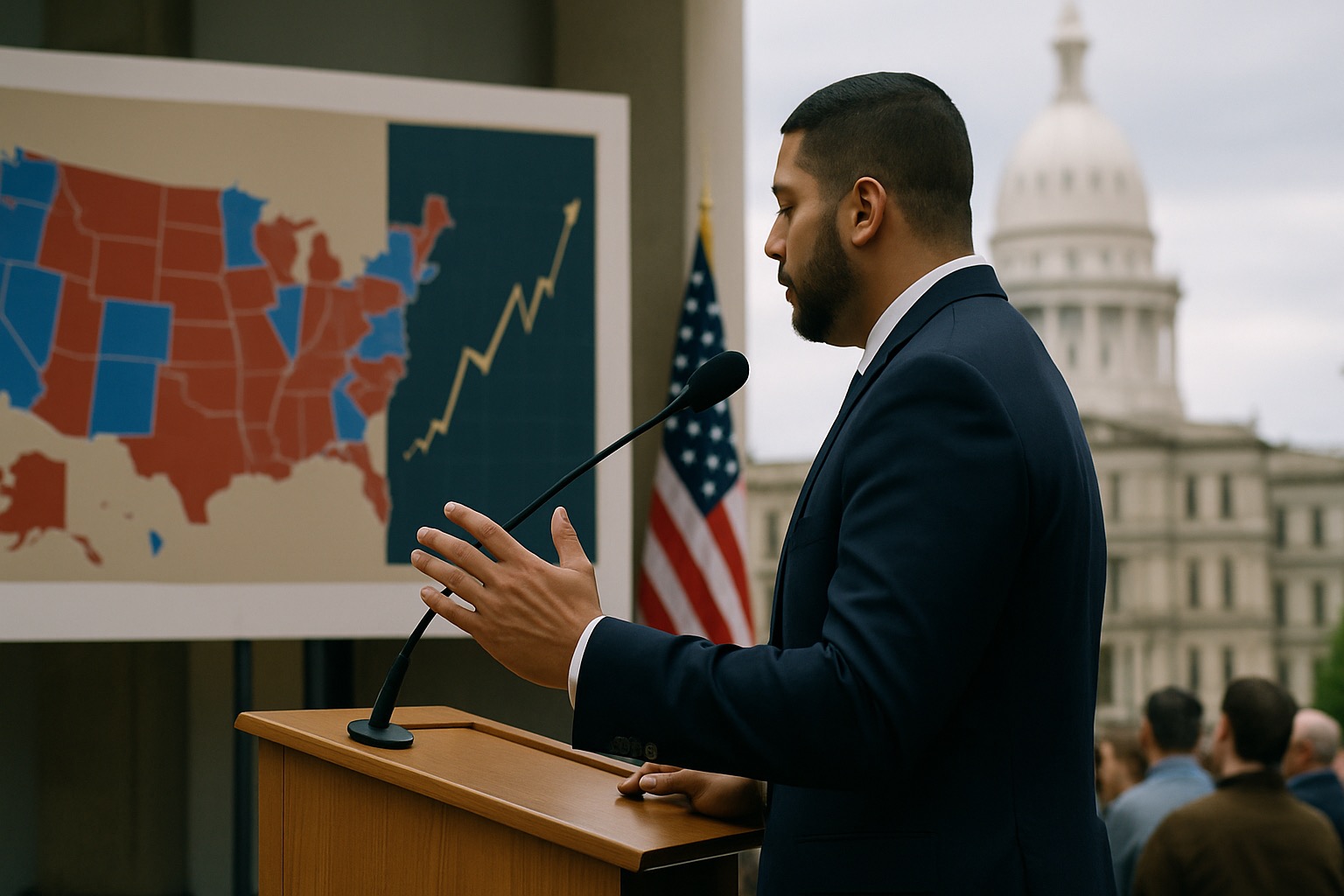
The market has El-Sayed at 86¢ heading into Michigan's Aug. 4 Senate primary. Campaign-commissioned polls show double-digit leads. But every independent poll of the general election paints a different picture — one the primary price has not fully accounted for.
The Campaign Polls
Two surveys conducted July 26–27 by Tavern Research and commissioned directly by the El-Sayed campaign showed him leading Rep. Haley Stevens by 48-37% in one poll and 46-36% in the other — the largest margins he has posted in any released survey, according to Newsweek. The market moved in lockstep: from 72¢ after Monday's Fox 2 debate to 85¢ as of Wednesday afternoon, on $6.1 million in combined volume across Kalshi, Polymarket, and PredictIt.
Campaign-funded polling is inherently optimistic — campaigns do not release numbers showing them losing — but the trajectory aligns with other Democratic-aligned surveys. Data for Progress (July 10–14, commissioned by American Priorities) had El-Sayed at 54-41%. A Tulchin Research poll (July 13–15, commissioned by Fighting for Michigan PAC) put him at 56-40%.
The one independent primary poll, conducted by the Glengariff Group July 8–11 for The Detroit News and WDIV-TV, showed Stevens leading 48-41%. No independent primary survey has been released since — a three-week data gap that the market is currently bridging on campaign-backed information alone.
What the General Election Looks Like
The independent general-election polling diverges sharply. A Glengariff survey conducted July 22–24 for the Michigan Education Association and Business Leaders for Michigan found Republican nominee Mike Rogers leading El-Sayed 48-41% in a hypothetical November matchup — while Stevens led Rogers 47-45%, per Newsweek's July 29 report.
A separate Glengariff poll for the Detroit Regional Chamber produced similar results: Stevens holding a narrow 45.2-43.8% edge over Rogers, while El-Sayed trailed 46.9-40.1%. Mitchell Research similarly found Rogers ahead of El-Sayed 41-38%, with Stevens the only Democrat running close enough to make the race clearly competitive.
The one dissenting data point is a Data for Progress memo for the Working Families Party, which found El-Sayed narrowly ahead of Rogers 47-46% while Stevens actually trailed Rogers 46-45%. That memo also gave El-Sayed stronger favorability ratings. But it is a Democratic-aligned survey, and it stands alone against three independent polls pointing the other direction.
The Closing Arguments
El-Sayed has made the electability argument largely irrelevant to primary voters — reframing it as a values question. At Monday's Fox 2 debate in Southfield, he told Stevens the "difference between us is $46 million of AIPAC spending," casting his opponent's general-election endorsement stack as evidence of institutional capture rather than strategic positioning.
He has locked up the endorsements that move progressive primary turnout: Sen. Bernie Sanders, Rep. Alexandria Ocasio-Cortez, the United Auto Workers, and — this week — Sen. Elizabeth Warren. Stevens has Whitmer, retiring Sen. Gary Peters, and Senate Minority Leader Chuck Schumer, who told Punchbowl News earlier this summer that she "has the best chance to win."
The Market Question
The Michigan Senate primary market is a primary market. It is pricing the Aug. 4 outcome, not the November outcome. The Senate control market — GOP at 56¢ on $9.5 million in volume — is pricing November and beyond.
Those two prices are not yet in direct conversation. If El-Sayed wins Aug. 4 and subsequent independent general-election polling confirms the Glengariff picture — Rogers running ahead — the Senate control market has a reason to reprice. The Cook Political Report rates the Michigan seat a toss-up regardless of nominee, but the structural numbers, if they hold, make one nominee a coin flip and the other a trailing position.
El-Sayed's bet is that the coalition that wins Democratic primaries in 2026 is different from the coalition that won them in 2018 — and that the general-election models haven't caught up. Stevens' bet is that November math doesn't change because the primary electorate wills it.
The market says El-Sayed wins Tuesday. What it says about November depends on what happens next.
Sources: Newsweek (July 29, "El-Sayed vs. Stevens chances of beating GOP's Mike Rogers in Michigan polls"); Washington Examiner (July 29, "El Sayed stays ahead of Stevens in final week of Michigan Senate race"); Detroit News (July 14, "Haley Stevens leads Abdul El-Sayed in new Michigan Senate race poll"); The Hill (July 8, "Michigan Democratic Senate primary a toss-up after McMorrow exit"); CNN (July 26, "Michigan, Missouri primaries will again lay bare the Democratic divide over Israel")