

Senate Control Sits at GOP 54¢ as Michigan Democrats Prepare to Nominate Their Weaker Candidate
El-Sayed leads Michigan's Aug. 4 primary by 15 points but trails Rogers by 10 in general polling. Senate control market holds at GOP 54¢ with $9.95M in volume.
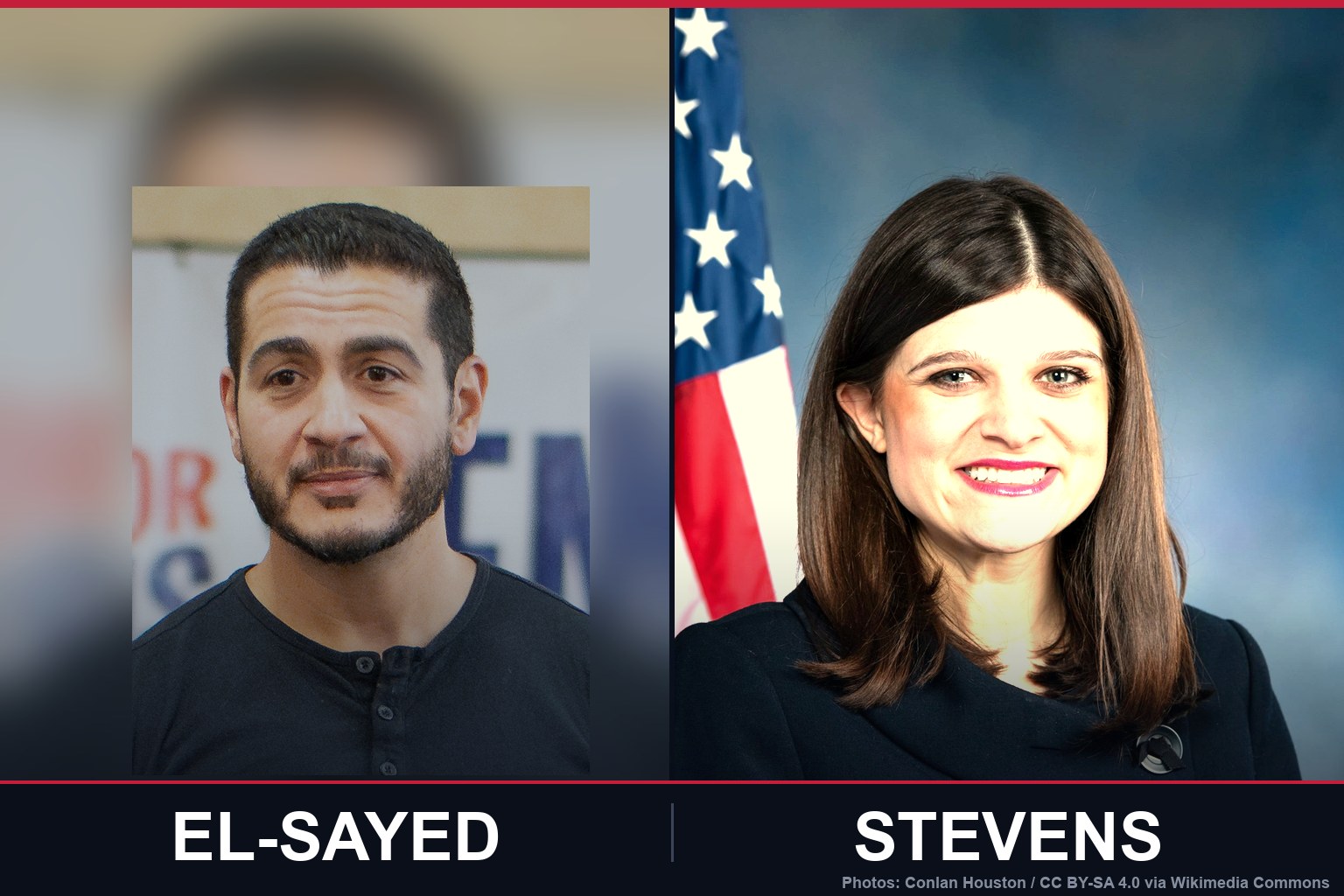
Michigan Democrats vote tomorrow in one of the most closely watched Senate primaries of the 2026 cycle. The outcome is close to settled. What happens in November is not.
Progressive Abdul El-Sayed enters Tuesday's primary with a commanding lead. An Emerson College Polling/WLNS/WOODTV survey conducted July 26-27 put El-Sayed ahead of Rep. Haley Stevens 54% to 39%, with a small slice of support going to state Sen. Mallory McMorrow, who dropped out earlier in the cycle. Accounting for undecided voters who lean toward a candidate, El-Sayed's edge grew to 57% against Stevens's 41%, per The Hill's July 30, 2026 reporting.
El-Sayed, backed by Sen. Bernie Sanders and Rep. Alexandria Ocasio-Cortez, leads decisively among voters under 50. Stevens holds a commanding edge with older voters and with Black voters, where she leads El-Sayed 58 percent to 38 percent in the same survey.
The primary contest is effectively decided. What the prediction markets are now pricing is November.
The Senate Control Market
The Senate party control market — tracking which party holds the chamber after November — sits at GOP 54¢ / Democratic 46¢ on cross-platform consensus across Kalshi and Polymarket, with $9.95 million in volume.
Michigan is one of the most consequential seats on the board. Sen. Gary Peters (D) is retiring. Cook Political Report rates the race a toss-up. And the polling gap between the two Democratic candidates' general election performance is the sharpest data point in the entire Senate control picture.
The 10-Point Electability Problem
A Michigan Education survey conducted by the Glengariff Group (July 22-24, n=600, ±4%) showed former Rep. Mike Rogers — the presumptive Republican nominee who faces no primary challenger — leading El-Sayed by 10 points in a hypothetical November matchup, 49% to 39%. The same survey showed Rogers and Stevens essentially tied at 45.5% to 44.7%, inside the poll's margin of error, according to The Hill's July 28, 2026 reporting.
Among independent voters, the divergence is stark. Glengariff found Rogers holding a nearly 28-point advantage over El-Sayed with independents. Rogers and Stevens were effectively even with that same group.
Rogers narrowly lost to Sen. Elissa Slotkin in 2024. His return to the ballot — with established name recognition and infrastructure — means the Democratic nominee's general-election ceiling matters enormously.
Why the Senate Control Market Hasn't Moved
The Senate Control market is not going to reprice dramatically on Tuesday's primary result alone. The market already reflects El-Sayed's likely nomination. What the 54¢ Republican price incorporates is a probability calculation that includes a Michigan outcome where the Democratic nominee underperforms relative to a true toss-up baseline.
The trigger the market is waiting for is the first general election poll after El-Sayed formally secures the nomination — expected within days. Glengariff's pre-primary polling showed a 10-point gap; a post-primary survey will tell whether El-Sayed's formal nominee status shifts any of those dynamics.
Michigan Gov. Gretchen Whitmer, former Sen. Debbie Stabenow, and other prominent Michigan Democrats backed Stevens explicitly on electability grounds. Their concern — that El-Sayed's progressive positioning works well in a primary electorate but may prove more difficult with swing voters in a state Trump narrowly carried in 2024 — is reflected in the Senate control market's current pricing.
The first post-primary Rogers vs. El-Sayed general election survey is what the market is watching for now.
Sources: The Hill, July 28, 2026 (Glengariff Group/Michigan Education Association survey); The Hill, July 30, 2026 (Emerson College Polling/WLNS/WOODTV primary poll); Newsweek, July 31, 2026 (electability analysis)