

Michigan Votes Tuesday and the Senate Control Market Holds at 54¢ GOP — Here's What It's Actually Watching
Michigan's Democratic primary is Tuesday. Senate control sits at 54¢ GOP. The market is waiting for the first post-primary general-election poll.
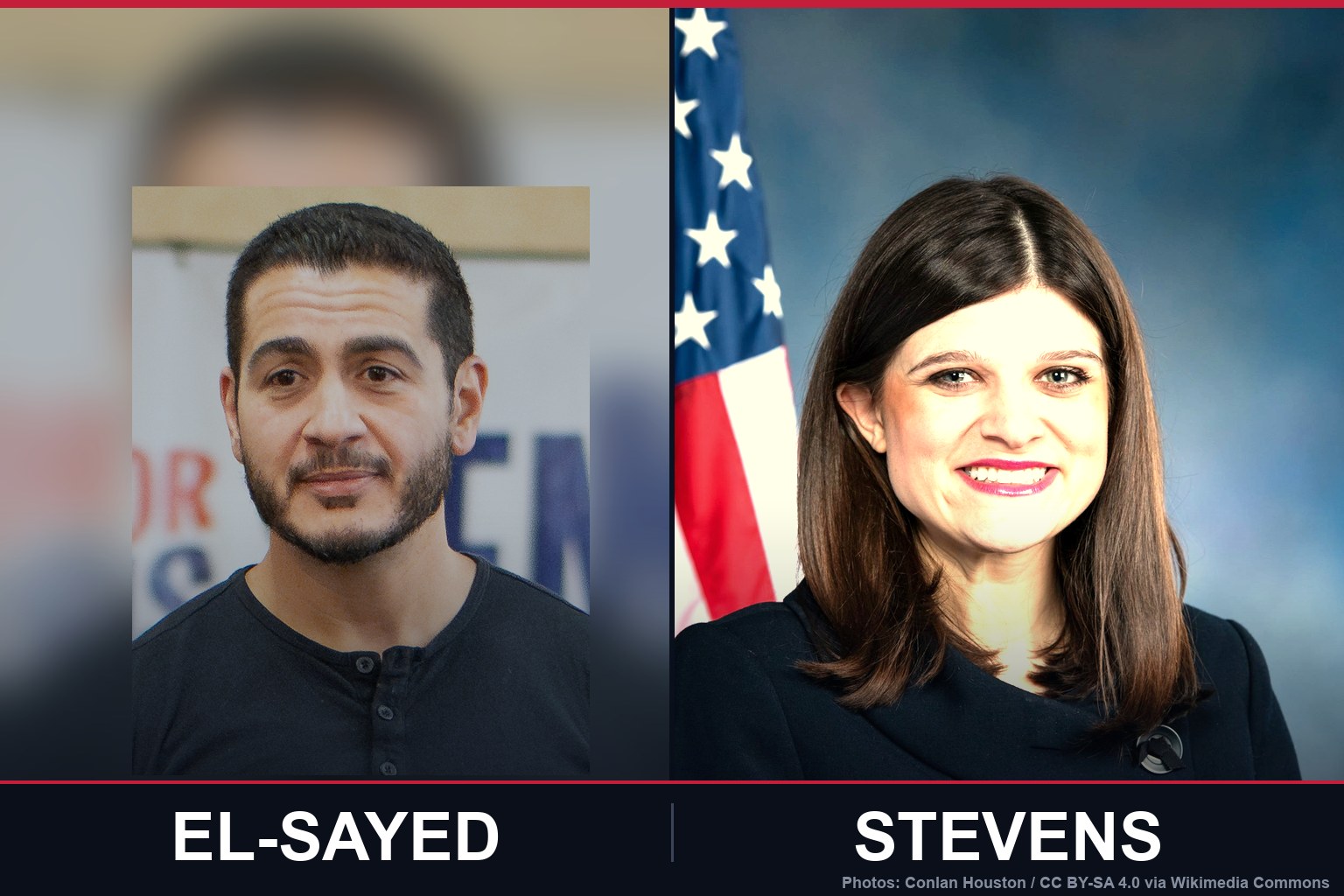
The Michigan Democratic Senate primary votes Tuesday. But the Senate control market — GOP at 54 cents, Democrats at 46 cents on $9.94 million in combined volume — hasn't moved. Traders aren't waiting for the primary result.
They're waiting for something else.
The Market Already Knows the Primary Direction
The Michigan Democratic primary has been priced deep into consensus territory — well above the range where the result produces meaningful new information for Senate control traders. Tuesday night is not the moment of uncertainty.
Watch the Senate control market Wednesday morning instead.
Here's why: the two remaining Democratic candidates have dramatically different general-election profiles against Republican Mike Rogers. A Glengariff Group poll commissioned by the Michigan Education Association and Business Leaders for Michigan, conducted July 22–24 among 600 likely November voters (margin of error ±4 points), found Rogers leading one Democrat by 10 points — and tied with the other.
That 10-point swing between candidates is the number Senate control traders will reprice when the first post-primary general-election poll drops.
The Rogers Gap That Defines the Stakes
Rogers — a former congressman who lost to Elissa Slotkin by fewer than 20,000 votes in 2024 — faces no Republican primary challenger. Cook Political Report rates the open Michigan Senate seat a toss-up. The seat has been held by retiring Sen. Gary Peters since 2015.
Rep. Haley Stevens, the four-term centrist congresswoman backed by outgoing Gov. Gretchen Whitmer, Sen. Gary Peters, and Senate Minority Leader Chuck Schumer, was essentially tied with Rogers in the Glengariff poll: Stevens at 45.5 percent, Rogers at 44.7 percent. The same survey found Rogers ahead of progressive Abdul El-Sayed by 10 points, 49 percent to 39 percent.
El-Sayed — endorsed by Bernie Sanders, Alexandria Ocasio-Cortez, and Elizabeth Warren — has dominated recent primary surveys. An Emerson College poll conducted July 26–27 (n=700, likely Democratic primary voters, margin of error ±3.7 points) found him leading 54 percent to 39 percent. The race drew more than $80 million in combined spending, making it the third most expensive Senate primary in American history according to ad-tracking firm AdImpact, per WLNS. The American Israel Public Affairs Committee's affiliated United Democracy Project spent more than $30 million supporting Stevens, per Roll Call.
Rogers told allies on a private call that his campaign would be in "good shape" if El-Sayed emerged as the nominee, per Stevens' campaign at their final debate. Republicans have identified Michigan as a clear pickup opportunity.
What Actually Moves 54¢
The Senate control market at 54 cents GOP reflects the full midterm landscape: House at 85 cents Democratic on $28.8 million in volume; Maine Senate at 64 cents Democratic; Texas holding at 54 cents GOP. Michigan is the most dynamic variable right now.
The Glengariff poll is the last published general-election matchup data before Tuesday's vote. The first post-primary survey — likely arriving by later this week — will be the first read on whether the Democratic nominee enters November at parity with Rogers or at a 10-point deficit.
If the general-election matchup data closes the Rogers gap, watch for the Senate control price to move toward 50/50. If it confirms the deficit, 54 cents may be conservative.
Tuesday night is the end of the primary story. Wednesday begins the one the market has been waiting for.
Poll hours in Michigan: 7 a.m. to 8 p.m.
Sources: The Hill / thehill.com (July 28, 2026); WLNS / wlns.com (Aug. 1, 2026); Newsweek / newsweek.com (Aug. 1, 2026); Roll Call / rollcall.com (July 28, 2026). Market data from cross-platform consensus pricing (Kalshi, Polymarket).