
Michigan Senate 2026 Race Guide: The Open Seat, the Primary Showdown, and What November Could Look Like
Michigan's 2026 Senate race guide: the August 4 Dem primary, Republican Mike Rogers, electability polling, and Senate control stakes.
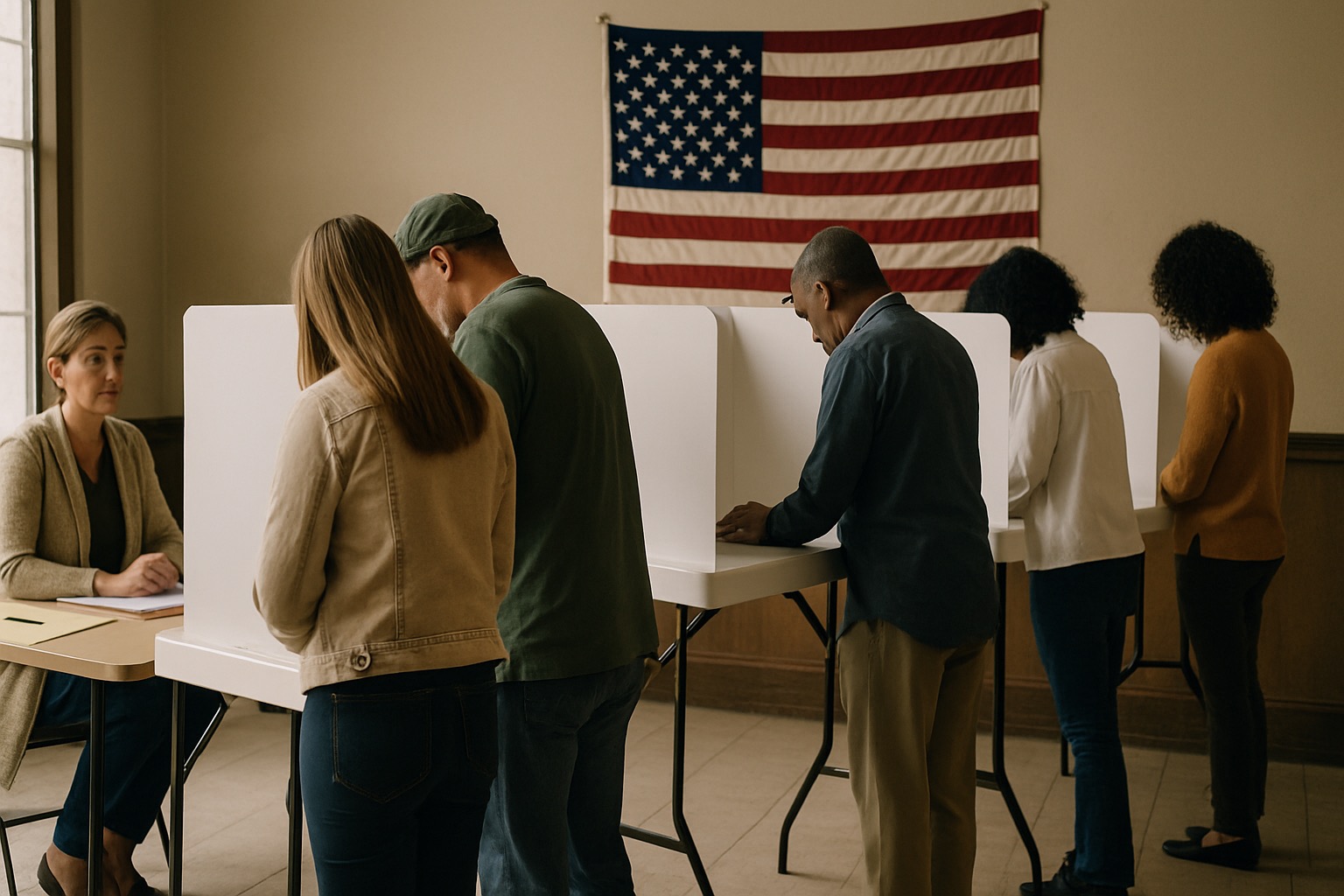
Six days before Michigan's August 4 primary, prediction markets show Democrat Abdul El-Sayed as the heavy favorite to claim the Democratic nomination for U.S. Senate — pricing him at 84% on our cross-platform consensus tracker. Yet general-election polling presents a more complicated picture, with surveys showing the Republican candidate leading El-Sayed by double digits in a hypothetical November matchup while finding a virtual tie against his Democratic opponent.
That gap between primary odds and general-election polling is the defining tension of one of the most closely watched Senate races of the 2026 cycle — and a contest that could help determine which party controls the chamber next year.
The Seat
Sen. Gary Peters, a two-term Democrat from Bloomfield Township, announced in January 2025 that he would not seek re-election. His decision immediately made Michigan one of the most competitive Senate contests on the map. The state has become a genuine presidential battleground: Donald Trump carried it in 2024 by approximately one percentage point. That same night, Democrat Elissa Slotkin defeated Republican Mike Rogers for the state's other Senate seat by fewer than 20,000 votes.
For Democrats, holding Peters' seat is essential to any realistic path back to the Senate majority. For Republicans, flipping it would either build on their current advantage or provide a buffer against potential losses elsewhere in the country. Inside Elections with Nathan L. Gonzales currently rates the Michigan Senate general election a Toss-up.
The Republican: Mike Rogers
Mike Rogers enters the general election without a primary contest. He filed for the Republican nomination on the same August 4 ballot as the Democratic primary and is running unopposed.
Rogers, born June 2, 1963, grew up in Livingston County, Michigan. He graduated from Adrian College in 1985 and served in the U.S. Army from 1985 to 1989. He then worked as an FBI Special Agent in Chicago from 1989 to 1994, specializing in organized crime and public corruption. He served in the Michigan state Senate from 1995 to 2000 — rising to majority floor leader — before winning election to Michigan's 8th Congressional District in 2000. He served seven terms in Congress, from 2001 to 2015, and chaired the House Permanent Select Committee on Intelligence for its final four years, during which he worked extensively on national security threats from China, Russia, and terrorist networks.
Rogers left Congress in 2015 and moved to Florida, where he entered the private sector as a cybersecurity advisor. He returned to Michigan in 2023 to run for the Senate seat vacated by retiring Sen. Debbie Stabenow — and, in 2024, narrowly lost to Slotkin by fewer than 20,000 votes, even as Trump carried the state. He announced his 2026 campaign on April 14, 2025, becoming the first major Republican to enter the race for Peters' seat.
Rogers has centered his campaign on bringing manufacturing jobs back to Michigan, lowering consumer costs, reducing federal spending, and supporting President Trump's agenda. He has said he will not seek to overturn Michigan's 2022 constitutional amendment protecting abortion access, calling the issue a matter for individual states.
The Democratic Primary
Democrats will decide their nominee on August 4 in what has become one of the most ideologically charged primaries of the 2026 cycle. The race took its current shape on July 6, when state Sen. Mallory McMorrow — who had hoped to occupy a middle lane — suspended her campaign after struggling to break through. McMorrow's name remains on the ballot; votes cast for her will count but will not yield a nomination.
What remains is a clear two-candidate contest between competing visions for the Democratic Party.
Abdul El-Sayed
El-Sayed, 41, is a physician and former director of the Wayne County Health Department. He ran for governor in 2018, losing the Democratic primary to Gretchen Whitmer, and has since built a following through progressive media and grassroots organizing. His policy platform centers on Medicare for All, opposition to U.S. military aid to Israel, corporate accountability, and a manufacturing vision that includes pushing automakers to produce affordable domestic electric vehicles. He has declined all corporate PAC money throughout the campaign.
El-Sayed carries endorsements from Sen. Bernie Sanders (I-VT), Sen. Elizabeth Warren (D-MA), Rep. Alexandria Ocasio-Cortez (D-NY), and the United Auto Workers union — a significant endorsement in a state where the auto industry remains central to the economy and Democratic coalition. His base runs deep among younger voters, Arab-American communities in Dearborn and southeast Michigan, and progressive activists.
Haley Stevens
Stevens, 42, is a four-term congresswoman representing Michigan's 11th District in the Oakland County suburbs north of Detroit, first elected in 2019. Her tenure has focused on manufacturing policy, implementation of the CHIPS and Science Act, and domestic critical minerals legislation. She has cast herself as a results-oriented legislator and the candidate best positioned to hold the seat in November.
Stevens carries endorsements from Gov. Gretchen Whitmer, Senate Minority Leader Chuck Schumer (D-NY), retiring Sen. Gary Peters, and a broad coalition of Michigan Democratic elected officials. Her campaign has also benefited from approximately $25 million in outside spending by the United Democracy Project — the political arm of the American Israel Public Affairs Committee — in addition to traditional fundraising. She has been a consistent supporter of U.S. military aid to Israel, a position that has become a sharp line of attack from El-Sayed.
What the Markets Are Pricing
Our cross-platform consensus tracker currently shows El-Sayed at 84% and Stevens at 16% to win the Democratic nomination, with approximately $5.9 million in trading volume across Kalshi, Polymarket, and PredictIt. The market has moved in El-Sayed's direction through July, tracking his polling edge and grassroots momentum. Early voting in Michigan's primary is already underway, adding a layer of certainty to votes cast before any late-breaking news.
The Polling Picture
Primary polling has shown wide variance depending on methodology and sponsorship. A Glengariff Group poll from July 8-11 showed Stevens leading El-Sayed by 7 points among likely Democratic primary voters. A Detroit News/WDIV poll from mid-July also showed Stevens with an advantage. A Tavern Research poll from early July found the race effectively tied (El-Sayed 41%, Stevens 42%, within the margin of error). Surveys sponsored by El-Sayed-aligned organizations — including a Tulchin Research poll from July 13-15 — showed him leading by double digits.
Partisan-sponsored polls on each side should be read with that context in mind. The independent surveys cluster closer to a competitive race, but El-Sayed's aggregate polling position and market price suggest he enters the final stretch as the frontrunner.
The Electability Debate
The central argument of Stevens' campaign has been that El-Sayed would underperform Rogers in November. The data she cites is specific.
A Glengariff Group poll conducted July 22-24, commissioned by the Michigan Education Association and Business Leaders for Michigan, found Stevens running in a virtual tie with Rogers in a hypothetical general-election matchup — Stevens 46%, Rogers 45%. The same poll showed Rogers leading El-Sayed by 10 points: Rogers 49%, El-Sayed 39%.
At the candidates' final televised primary debate in Southfield on July 27, Stevens cited this polling and called out a reported statement by Rogers — made on a private call — that his campaign would be in "good shape" if El-Sayed emerged as the Democratic nominee. El-Sayed disputed the framing and Rogers has not publicly confirmed the characterization.
El-Sayed's counterargument: general-election polling conducted months before November captures name recognition gaps, not campaign-built voter enthusiasm. He argues his grassroots model — fueled by small-dollar donors, UAW institutional support, and deep organizing in communities of color and younger voters — would produce a general-election ceiling that July polling cannot measure. He points to his primary polling lead as evidence of Democratic enthusiasm behind his candidacy, and notes that Slotkin overcame similar skepticism in 2024.
This is the core question Michigan Democrats are answering on August 4: whether the candidate with the stronger primary coalition is also the candidate better equipped to hold the seat in the fall.
The Final Debate
El-Sayed and Stevens held their second and final televised debate on July 27 in Southfield. The exchange covered manufacturing policy, corporate money, the U.S.-Israel relationship, electability, and the tone of the campaign.
El-Sayed pressed Stevens on her vote against a House amendment to block U.S. military aid to Israel and questioned the United Democracy Project's $25 million in outside spending on her behalf. Stevens defended her positions and pointed to El-Sayed's past comments about Gov. Whitmer, former candidate McMorrow, and retired Sen. Debbie Stabenow as evidence of a problematic pattern. On economics, El-Sayed called for domestically manufactured affordable EVs and criticized free trade he argued had hollowed out Michigan manufacturing. Stevens highlighted her legislative record on critical minerals and the CHIPS Act and cast herself as "Michigan's manufacturing geek" with a track record to match.
Senate Control in the Balance
Prediction markets currently show Republicans at 56% to retain Senate control in 2026, with Democrats at 44%. Michigan is among a small cluster of seats — alongside North Carolina, Georgia, and Maine — where the general-election result most directly moves that needle.
A Democratic hold in Michigan keeps the party's path to a majority viable. A Republican flip would widen the GOP's cushion and put additional pressure on Democrats to run the table elsewhere. The seat Rogers nearly won in 2024, running against a different opponent in a different year, is the one he's running for again — giving him a strong structural starting point regardless of which Democrat emerges.
What to Watch
August 4 primary: El-Sayed is the market and polling frontrunner, but turnout in suburban Oakland County — Stevens' geographic base — could narrow or overturn that edge. McMorrow's name on the ballot introduces uncertainty in a tight race; a meaningful protest vote for the suspended candidate could affect a close outcome.
First general-election poll: Watch for the first post-primary poll matching the Democratic nominee against Rogers. It will quickly clarify whether the general-election electability argument was accurate or overstated.
Senate control context: Michigan matters most in scenarios where control comes down to one or two seats. Monitor the broader Senate map — particularly North Carolina, Georgia, and Maine — as these races interact. A Democratic hold in Michigan combined with a pickup elsewhere is the clearest path to a majority; a Michigan flip makes that path much steeper.
Sources
- Roll Call, "Contentious Democratic Senate contest dominates Michigan's primary season," July 28, 2026 — rollcall.com
- The Detroit News, "El-Sayed, Stevens spar in final debate of bruising Democratic primary," July 27-28, 2026 — detroitnews.com
- The New York Times, "6 Takeaways From Michigan's Senate Debate," July 27, 2026 — nytimes.com
- The New York Times, "Michigan Senate Primary Gives Democrats Stark Choice," July 6, 2026 — nytimes.com
- USA Today, "El-Sayed vs Haley Stevens: Michigan is the race to watch," July 25, 2026 — usatoday.com
- NBC News, "GOP former Rep. Mike Rogers launches another Michigan Senate run," April 14, 2025 — nbcnews.com
- WDET, "Michigan's Democratic senate primary is a tight, expensive race," July 24, 2026 — wdet.org
- Bridge Michigan, "Mike Rogers runs again for US Senate in Michigan," April 2025 — bridgemi.com
- U.S. House of Representatives Biographical Directory, "ROGERS, Mike" — bioguide.congress.gov
- Michigan Advance, "New poll shows El-Sayed, Stevens statistically tied," July 8, 2026 — michiganadvance.com