

Senate Control at 55/45 — What Tuesday Night's Michigan Result Actually Moves
Senate control at 55¢ for Republicans heading into Michigan’s Aug. 4 primary. Here’s the repricing logic and what to watch after the votes are counted.
The Senate control market — Republicans at 55 cents, Democrats at 45 cents, across $9.86 million in combined volume on Kalshi and Polymarket — has barely budged in a week. That's not a sign of stagnation. It's a sign that the market has already priced in the most likely Michigan outcome. Tuesday's primary is still the hinge.
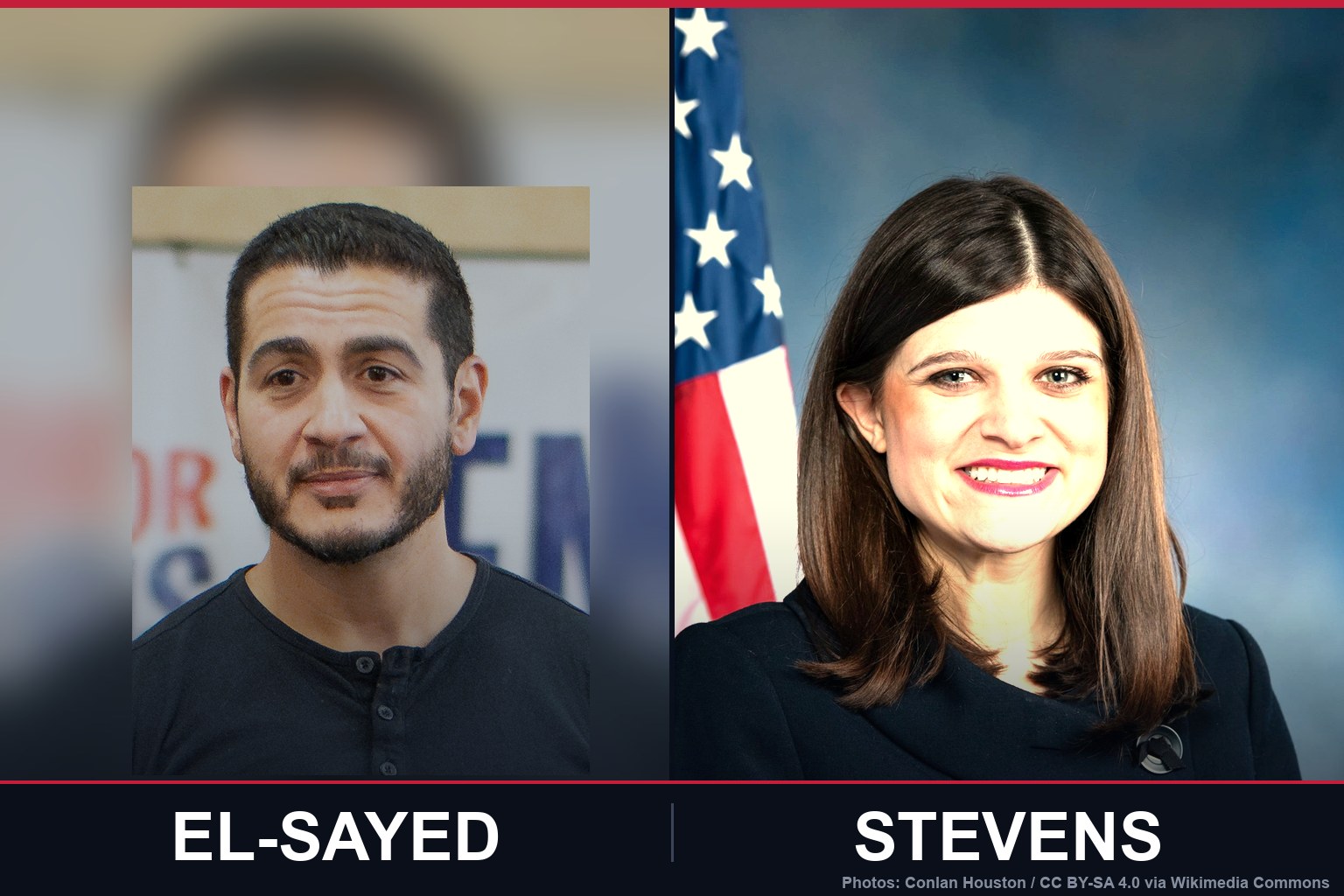
Here's the structure of the bet. Michigan's Democratic Senate primary is expected to produce a result Tuesday night. The winner faces former Rep. Mike Rogers, who ran unopposed in the Republican primary, in one of the most closely watched general election contests of the 2026 cycle. Cook Political Report rates the open seat held by retiring Sen. Gary Peters a toss-up. Senate control flows directly through what happens in Michigan in November — but the primary's outcome shapes that November picture in two very different ways.
The El-Sayed Scenario (Expected)
A Glengariff Group survey conducted July 22-24 for the Michigan Education Association and Business Leaders for Michigan found Rogers leading progressive candidate Abdul El-Sayed by 10 points in a hypothetical November matchup — 49 percent to 39 percent — with 11 percent undecided.
Rogers himself offered a frank assessment on a private June call with supporters, the recording of which was obtained by CNN. "If he wins, I think we're in good shape," Rogers said of El-Sayed. "I think he's so radical. I think he's going to lose big parts of the west part of the state."
If El-Sayed wins Tuesday — the direction the market has been pointing for weeks — the Senate control market may not move meaningfully in response. The 55/45 Republican edge already reflects traders' expectations about November, and those expectations already account for El-Sayed as the heavy favorite to emerge from the primary. In other words: El-Sayed winning Tuesday is the base case, not a catalyst.
What could still shift the market Tuesday night: the margin and the turnout composition. A dominant El-Sayed win — especially one driven by high turnout among younger and progressive voters — could signal something the pre-primary Glengariff matchup data doesn't fully capture: enthusiasm that translates to November. That's a counter-signal traders might price at the margins. But it's subtle.
The Stevens Scenario (Surprise)
The same Glengariff poll shows Rep. Haley Stevens essentially tied with Rogers: 45.5 percent to 44.7 percent, within the survey's margin of error of plus or minus 4 points. Stevens and Rogers also receive nearly identical support among independent voters — roughly 40 percent each. Among those same independent voters, Rogers holds a nearly 28-point lead over El-Sayed.
A Democratic nominee who enters the general race in a statistical tie with Rogers is a fundamentally different Senate control landscape than one entering 10 points down.
Stevens winning Tuesday would be the genuine shock — her market has been priced at long odds heading into primary day. A Stevens upset would force a repricing of Michigan's general election probability, and Michigan is the single most important unresolved Senate battleground on the current calendar. If the seat suddenly looks like a coin flip with a competitive Democratic nominee, that feeds directly into Democratic chamber-control odds.
Democrats hoping to capture a Senate majority almost certainly have to hold Michigan, as CNN noted in its July 23 reporting on the race. Senate Republicans currently hold a 53-47 majority. Democrats need a net gain of four seats to take control — and losing Michigan while gaining elsewhere becomes a very difficult path.
What 55/45 Is Already Pricing
The Senate control market at 55/45 is not a Michigan-only bet. It prices the entire November map: Maine (Democrats 64 cents), Texas (Republicans 53 cents), and every other competitive seat in aggregate.
But Michigan is the biggest unresolved variable heading into August. Maine's market has been stable for days. Texas is locked in a 53/47 range at the tightest spread on the board. Michigan hasn't produced a nominee yet — and the nominee matters enormously for what November looks like in a state Trump carried in 2024 by 1.4 points and Rogers nearly won in a Senate race that same year.
The Public Sentiment Institute poll, published July 31 and reported by Newsweek on August 1, showed El-Sayed leading Stevens 54.8 percent to 45.2 percent in a projected primary result, and gave El-Sayed a 96 percent probability of leading the field. The Emerson College/WLNS poll found El-Sayed ahead 54 percent to 39 percent. The polling uniformity heading into primary day is striking — but as the Glengariff general-election data shows, winning the primary and winning November require entirely different coalitions.
The Sequence to Watch
Tuesday night: Michigan primary result arrives. If El-Sayed wins as expected, Senate control market may tick marginally or hold flat. If Stevens wins against the odds, watch for an immediate shift.
Days after: The first post-primary Rogers vs. nominee general election poll. That survey — not the primary result itself — may be the more significant Senate control signal. If it shows the general matchup has moved from the Glengariff baseline (Rogers +10 over El-Sayed), that's the moment the market reprices.
The Senate control market at 55/45 is telling you: Republicans have an edge, it's not decisive, and Michigan is the next gate. Tuesday night opens it — or doesn't.
Sources: The Hill/Glengariff Group (July 28, 2026); CNN (July 23, 2026); Roll Call (July 28, 2026); Newsweek/Public Sentiment Institute (August 1, 2026); Cook Political Report. Market pricing from Kalshi and Polymarket as of August 1, 2026, 7:15 p.m. ET.