Nevada Governor 2026 Race Guide: Joe Lombardo and Aaron Ford in America's Most Competitive Swing State
A complete guide to Nevada's 2026 governor's race: Joe Lombardo vs. Aaron Ford — polling, fundraising, race ratings, key issues, and election markets.
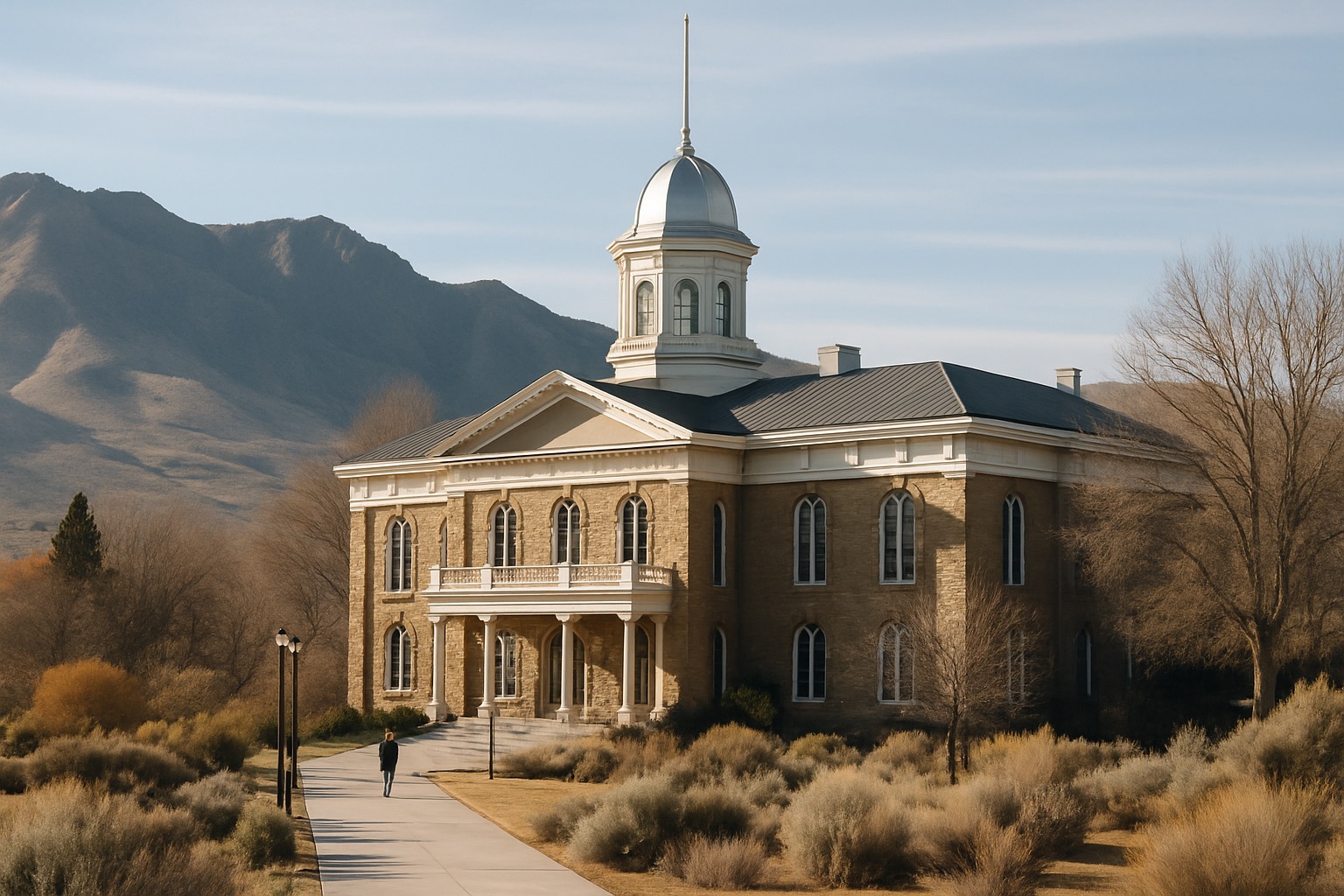
The 2026 midterm cycle has no shortage of marquee governor's races, but Nevada's may be the most purely competitive of the bunch. Incumbent Republican Gov. Joe Lombardo is defending a seat he won by fewer than 16,000 votes in 2022 — less than 1.5 percentage points — against Democratic Attorney General Aaron Ford, who has staked out working-class affordability as his central argument in one of the most expensive and closely watched races in the country.
National handicappers rate the contest anywhere from Toss-Up (Cook Political Report) to Lean Republican (Sabato's Crystal Ball) to Tilt Republican (Inside Elections). Recent polling ranges from a dead tie to Lombardo leading by seven points, depending on who commissioned the survey. What the polls collectively suggest: Nevada once again refuses to tell voters who's winning before Election Day.
For election market observers, Nevada's gubernatorial contest is worth tracking not just as a standalone race but as a reflection of the broader national environment. The state where Bill Clinton won in 1992, George W. Bush narrowly lost in 2004, Barack Obama won twice, and Donald Trump carried the state's electoral votes in 2024 by roughly three points — Nevada has a way of previewing the national mood.
The Candidates
Joe Lombardo (R, Incumbent)
Joe Lombardo is a retired Las Vegas Metropolitan Police Department sheriff who made history in 2022 by ousting incumbent Democratic Gov. Steve Sisolak, becoming the first Republican to win a Nevada statewide race since 2014. He has governed as a functional conservative in a state with a Democratic legislature, vetoing dozens of bills while pursuing education reform, school choice, and a low-tax economic development agenda. His law-and-order brand — rooted in 25 years in law enforcement — anchors his reelection pitch.
Lombardo's financial operation is formidable by any standard. He entered the general election with approximately $9.2 million in his direct campaign account. Combined with affiliated political action committees, the picture is considerably larger: the Better Nevada PAC raised $12 million in the second quarter of 2026 alone, including $5 million from the Republican Governors Association, $2.5 million from billionaire hotel mogul Robert Bigelow, and $1 million from venture capitalist Ben Horowitz and his wife. Nevada's gaming industry has backed him extensively — Station Casinos and the Fertitta family contributed $3 million to his affiliated Nevada Way PAC; Boyd Gaming, Fontainebleau Las Vegas, and Caesars Entertainment each contributed as well.
Republican-aligned groups have spent more than $13 million on television and digital advertising since December 2025, including negative ads hitting Ford for out-of-state travel. Democratic-aligned groups spent roughly $77,000 over the same period — a ratio of approximately 174-to-1 in Lombardo's favor heading into the summer.
A political headache arrived in mid-July when body camera footage surfaced showing Lombardo apparently invoking his gubernatorial office during a traffic stop by a Las Vegas Metropolitan Police Department officer. Lombardo's team disputed the characterization of the encounter. Whether the incident has lasting political impact in a race already defined by larger economic anxieties remains an open question.
Aaron Ford (D)
Aaron Ford is Nevada's two-term attorney general and the first Black person elected to lead that office in state history. He won the Democratic primary on June 9, 2026, defeating Washoe County Commissioner Alexis Hill 63.8% to 23.9%. His endorsers include U.S. Senators Catherine Cortez Masto and Jacky Rosen and former Vice President Kamala Harris.
Ford is running as a consumer-protection progressive fluent in the language of Nevada's labor movement. His central message — cutting costs and building an economy that works for working people — centers on housing affordability, the rising cost of living, and protecting state programs from federal funding cuts. His affiliated Forward Nevada PAC received a $500,000 contribution from the American Federation of State, County and Municipal Employees in the second quarter. Bricklayers, educators, nurses, and service workers have been visible in his campaign organizing.
Ford's fundraising trails Lombardo's substantially but reflects a different base of support. His campaign has raised contributions from nearly 13,000 individual donors, roughly 90% of whom gave $90 or less. Approximately 64% of major donations (those over $100) to his campaign came from out of state, compared to 25% for Lombardo — a metric both campaigns have weaponized. Ford's team calls it evidence of national grassroots enthusiasm; Lombardo's team calls it evidence Ford is running as a D.C. import.
Entering the general election, Ford's campaign and affiliated PAC had approximately $3.7 million on hand combined — a significant disadvantage, but one Ford's campaign expects to narrow as national Democratic money flows into the state.
Primary Results: What They Tell Us
Lombardo won the Republican primary June 9 with 91.0% of the vote against a field of six minor opponents. Ford won the Democratic primary with 63.8%, a margin that reflects real support without being dominant — Hill carried Washoe County and rural areas before falling short overall.
The primary results reinforce two storylines heading into November. Lombardo enters the general as a unified Republican incumbent with no meaningful intra-party wounds. Ford enters with a primary win that demonstrated strength in Clark County, the Democratic base, but a ceiling in northern Nevada that he will need to address if he is to close the gap on Lombardo's suburban performance.
The Polling Landscape
Available surveys heading into August 2026 span a wide range, largely depending on which party commissioned them.
Republican-aligned firms: Tarrance Group (July 25–29, likely voters) had Lombardo ahead 50–43; Grassroots Targeting (early July) showed 52–40; Public Opinion Strategies (June 27–29) showed 51–42.
Democratic-aligned firms: Public Policy Polling (July 15–16, 558 likely voters) found the race exactly tied 44–44; Wedgewood Polls (July 9–12, 700 likely voters) had Lombardo ahead 50–47.
Nonpartisan polling: Noble Predictive Insights (March 2026, 845 registered voters) showed Lombardo 39%, Ford 38%, with 17% undecided. Emerson College (November 2025, 800 registered voters) had the two candidates at 41% each.
The pattern is familiar to anyone who has followed Nevada races closely. Republican-leaning surveys show Lombardo with a comfortable lead; Democratic-leaning surveys show a dead heat; nonpartisan surveys tend to land in the middle. The most recent data — from both R and D firms in the final weeks of July — suggests the race is in the 3- to 7-point range for Lombardo, with the true number likely somewhere in between. The large share of undecided voters in earlier surveys has largely resolved as summer advertising has shaped opinions.
The Ground Lombardo is Defending
Nevada's political terrain favors neither party cleanly. The state has moved slightly rightward at the presidential level over the past cycle, but gubernatorial electorates in Nevada often behave differently than presidential electorates. Lombardo won in 2022 even as Republicans lost governor's races in other states, suggesting personal appeal that extends beyond straight-ticket Republican performance.
In 2026, midterm elections historically punish the party holding the White House, which would suggest a favorable environment for Democrats. Nevada's economy — heavily dependent on tourism, gaming, and the service sector — is acutely sensitive to federal policy on immigration, federal lands, and consumer spending. The data center buildout in northern Nevada has driven explosive energy demand, creating both economic opportunity and genuine questions about water rights and grid capacity that both candidates have addressed cautiously.
Housing affordability is the defining kitchen-table issue. Median rents in Las Vegas and Reno have climbed significantly over the past five years. Ford has made affordability the core of his economic message; Lombardo has pointed to economic growth metrics under his tenure as evidence his approach is working.
Historical Context
The last Nevada governor to win reelection was Republican Brian Sandoval in 2014, by 35 points — an outlier in a state famous for competitive races. Before Sandoval's blowout, Nevada had regularly produced tight gubernatorial elections. Steve Sisolak won in 2018 by approximately 4 points. Lombardo won in 2022 by 1.5 points. The state's political geography — where Clark County (Las Vegas, roughly 70% of the state population) leans Democratic and rural Nevada leans heavily Republican, leaving Washoe County (Reno/Sparks) as the decisive swing region — creates a structural environment that almost guarantees competitive races.
Lombardo is not sitting on a margin that provides comfort. He won by a nail's breadth and both campaigns understand it.
Race Ratings
Cook Political Report: Toss-Up Sabato's Crystal Ball: Lean Republican Inside Elections: Tilt Republican
The distribution of ratings suggests the race leans modestly Republican but is well within reach for Democrats. The distinction often comes down to whether the analyst weighs Lombardo's incumbency advantage more heavily than the broader national environment, which in a midterm cycle is expected to offer Democrats some structural tailwind.
The Market Picture
Nevada's governor's race has an active market, currently pricing Aaron Ford at 54 cents and Joe Lombardo at 46 cents — a modest edge for the Democratic challenger that reflects a national midterm environment where the White House party typically faces headwinds. The market's lean toward Ford runs counter to most public polling, which shows Lombardo leading in Republican-affiliated surveys, a divergence that mirrors the broader tension between polling averages and market-priced probability across competitive 2026 races.
For the broader national picture, the market on which party will control the U.S. Senate after November 2026 currently prices Republicans at 54 cents and Democrats at 46 cents — a reading that reflects a national environment narrowly favoring Republicans but well within reach for Democrats. A shift of even a few points in the national environment would ripple directly through Nevada's governor's race.
What to Watch
Ford's advertising ramp-up. With $3.7 million on hand, Ford's campaign has promised a significant push in August and September. The question is whether that spending can close the name-recognition and narrative gap that Lombardo's $13+ million advertising head start has established.
The Latino vote. Noble Predictive Insights' data shows Ford with a 23-point advantage among Latino and Hispanic voters — a critical constituency in Clark County. Lombardo's reelection path likely requires either narrowing that gap or running up enough margin in suburban Clark and Washoe County to offset it.
Independents. Emerson College data showed Lombardo with an 8-point lead among independents, with 40% of them still undecided at the time. Roughly 30% of Nevada's registered voters hold no major-party affiliation. The independent vote is effectively the race.
National environment. Nevada has no Senate race in 2026, but national party spending will flood the state through affiliated committees, and the overall political environment will shape the governor's contest. If the national environment breaks toward Democrats as sharply as it did in 2018, Lombardo's lead in partisan polls may prove illusory. If it stabilizes or continues to favor Republicans, his margin could hold.
The traffic stop story's shelf life. Character narratives can matter in close races. Whether Ford's campaign amplifies the body cam episode in paid advertising — and whether Nevada's media sustains coverage — will indicate how much the campaigns believe it resonates with persuadable voters.
Nevada doesn't resolve early. It rarely offers its verdict before the final votes are counted. That has been true in virtually every competitive cycle of the past two decades, and there is no reason to expect 2026 to be different. The Silver State's governor's race is, for now, exactly what it looks like: a genuine contest between an incumbent who has run his race well on paper and a challenger who believes the economy and the national environment are moving in his direction.
Verification: All polling figures cited are from named polling firms as reported by The Nevada Independent and Las Vegas Review-Journal. Campaign finance figures are drawn from official state disclosure reports as covered by The Nevada Independent, Nevada Current, and Las Vegas Sun. Race ratings from Cook Political Report, Sabato's Crystal Ball, and Inside Elections.