
Graham Falls 4¢ to 62 Cents Night Before SC Debate — Norman and Fry Gain as Market Hedges the Stage
South Carolina’s Senate market fades Saturday evening — Graham slips to 62¢ as Norman gains 2¢ and Fry jumps 3¢ the night before Monday’s debate.
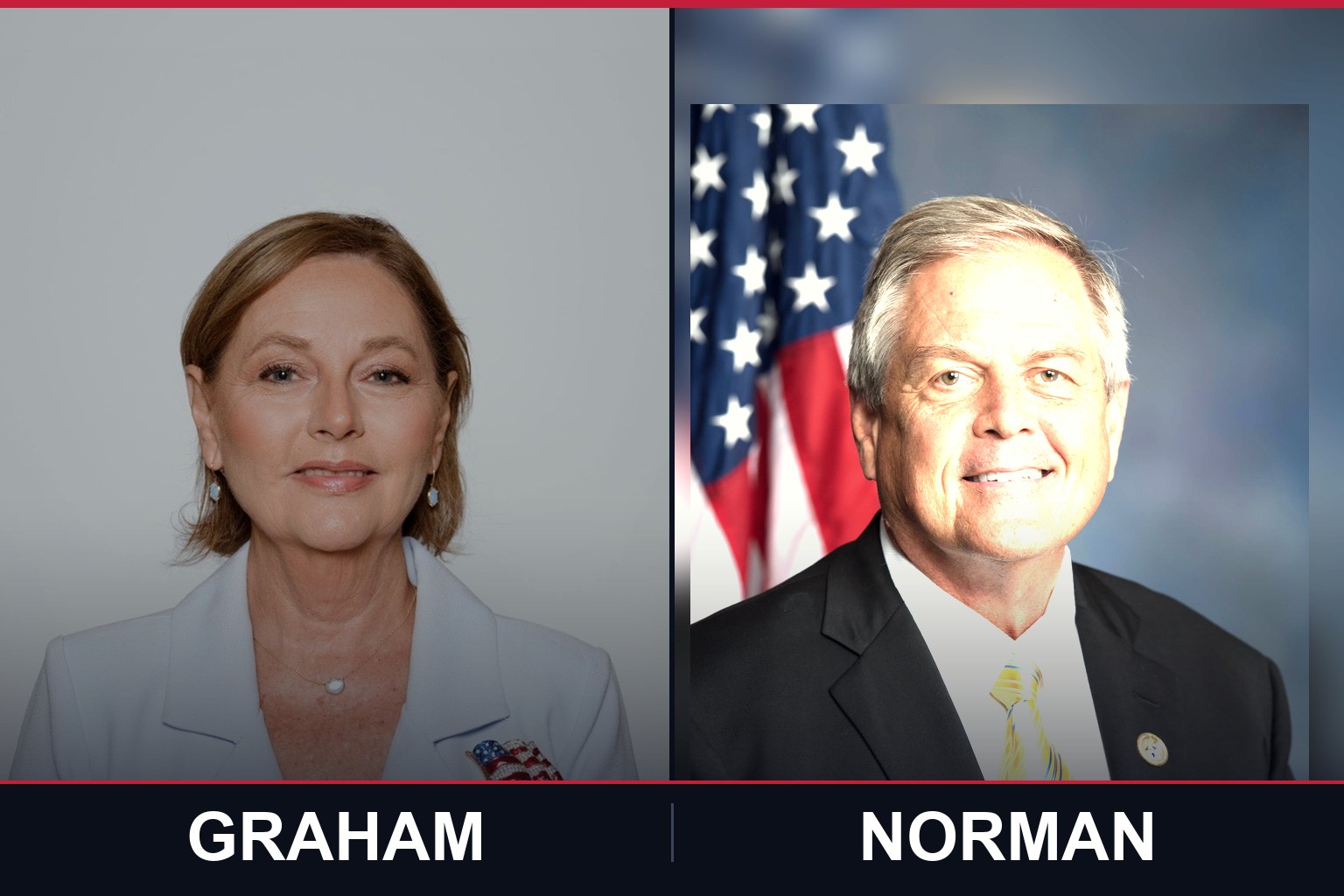
South Carolina's Senate prediction market took a notable turn Saturday evening, with Darline Graham's chances fading 4 cents in the hours leading up to Monday's televised debate. By 7 p.m. ET, cross-platform consensus pricing across Kalshi and Polymarket showed Graham at 62 cents — down from an afternoon high — while Ralph Norman climbed 2 cents to 22 cents and Russell Fry jumped 3 cents to 17 cents. Total market volume stands at $4.04 million.
The reversal matters because it erases the intraday gains Graham's market had posted earlier Saturday. Traders appear to be hedging ahead of an unpredictable live stage — the first televised debate in this compressed, historic race.
The Debate Lineup and the Polling Inversion
The South Carolina Republican Party selected five candidates for Monday's one-hour debate, airing from 7 to 8 p.m. ET live from WIS Studios in Columbia on Gray Media stations statewide — including WIS NBC 10, FOX Carolina, and Live 5 News/WCSC. The event comes just days before early voting opens on August 5 and 10 days before the August 11 Republican primary.
What makes Monday night uniquely interesting isn't just the timing — it's who the SCGOP says leads the field by their own polling averages. According to the party's selection criteria, candidates were ranked by polling averages from surveys not funded by campaigns or affiliated PACs. The SCGOP listed them in this order: Ralph Norman, Darline Graham, Russell Fry, Mark Lynch, and Mark Sanford. Norman ranks first.
The market prices the opposite. Graham sits at 62 cents — a 40-cent lead over Norman at 22 cents. Fry, listed third by the party, has been creeping toward 17 cents.
That 40-cent gap between the SCGOP's own data naming Norman the polling leader and the market's continued confidence in Graham is one of the defining tensions of this race. Market traders appear to price something the polling averages don't fully capture: Graham's institutional advantages as an incumbent senator, the weight of name recognition in a race with nine certified candidates, and the compressed timeline that rewards candidates who enter with an existing profile.
"As Republicans consider who should represent us on the ballot and represent South Carolina in the U.S. Senate for the next six years, it's critical that they have an opportunity to compare the candidates on the issues and how they communicate their ideas to the public," SCGOP Chairman Drew McKissick said when announcing the debate lineup on July 31.
What the Debate Could Move
The August 3 debate is one of two scheduled televised forums before early voting opens August 5; a second, hosted by Nexstar/WCBD in Mount Pleasant, follows on August 4. McKissick told WIS News 10 that the event "could play an important role" in helping voters make decisions in a compressed election cycle. "I think you're going to see it probably get intense," he said.
The case for a Norman rally: He leads the SCGOP's polling average, has backing from prominent conservative voices critical of Graham's establishment ties, and enters the debate with the clearest opportunity to define himself to a statewide audience that may not yet have a firm impression of him. If Monday night produces a strong performance, early voting begins Tuesday — giving those impressions immediate electoral force.
The case for Graham holding: The market has been remarkably durable in her favor even as Norman climbed from low teens to the mid-twenties over the past two weeks. Polling has consistently shown large undecided shares — Emerson College found a quarter of likely primary voters without a firm preference — and that undecided bloc hasn't broken cleanly toward any challenger. Graham's name carries inherent weight in a race to fill her late brother's seat.
Fry's 3-cent tick to 17 cents Saturday evening is its own signal. Emerson data (July 28-29) showed voters leaning toward Fry and former Gov. Mark Sanford among undecideds at higher rates than toward Graham or Norman — a dynamic that keeps the dark-horse thesis alive heading into the debate.
The Runoff Math
A runoff on August 25 is near-certain. With nine certified candidates on the ballot and South Carolina law requiring a majority to win outright — otherwise the top two advance to an August 25 runoff — the August 11 primary serves largely as a filter. The market's 62/22/17 pricing reflects not just who wins the primary, but who advances in the best position heading into a potential head-to-head.
A Graham-Norman runoff is the market's default expectation. Fry at 17 cents represents the market keeping a lane open for a different pairing.
The Danny Ford lawsuit adds a procedural footnote. Ford was disqualified under SCGOP Rule 11-6A — requiring participation in two of the last three primary cycles — and obtained a temporary restraining order. A court hearing is scheduled for the morning of August 3, with a ruling expected shortly after. If the court reinstates Ford, he enters the ballot and could alter the undecided vote distribution in the primary. As of Saturday evening, the market has assigned no meaningful probability to that outcome shifting the race.
The 40-Cent Question
Graham leads the market by 40 cents. Norman is ranked first by the SCGOP's own polling data. Monday night is the last major stop before voters begin casting ballots.
Something has to give — either the market recalibrates after the debate, or the 40-cent spread survives the night intact. In South Carolina's Senate special election, with $4 million already traded and early voting beginning the morning after, the market's next move may come before the polls even open.
Sources: WIS News 10 (July 31, 2026); Post and Courier (July 31, 2026); WCIV/ABC News 4 Charleston (July 31, 2026); FOX Carolina/WHNS (July 31, 2026); Live 5 News/WCSC (July 31, 2026); Emerson College Polling via The Hill (July 30, 2026). Market pricing from Kalshi and Polymarket as of August 1, 2026, 7:00 p.m. ET.