
South Carolina's Senate Ballot Is Set at Nine: What the Party Purge Means for the Runoff
South Carolina GOP certified 9 of 12 Senate filers. With no majority likely on Aug. 11, the real race starts Aug. 25.
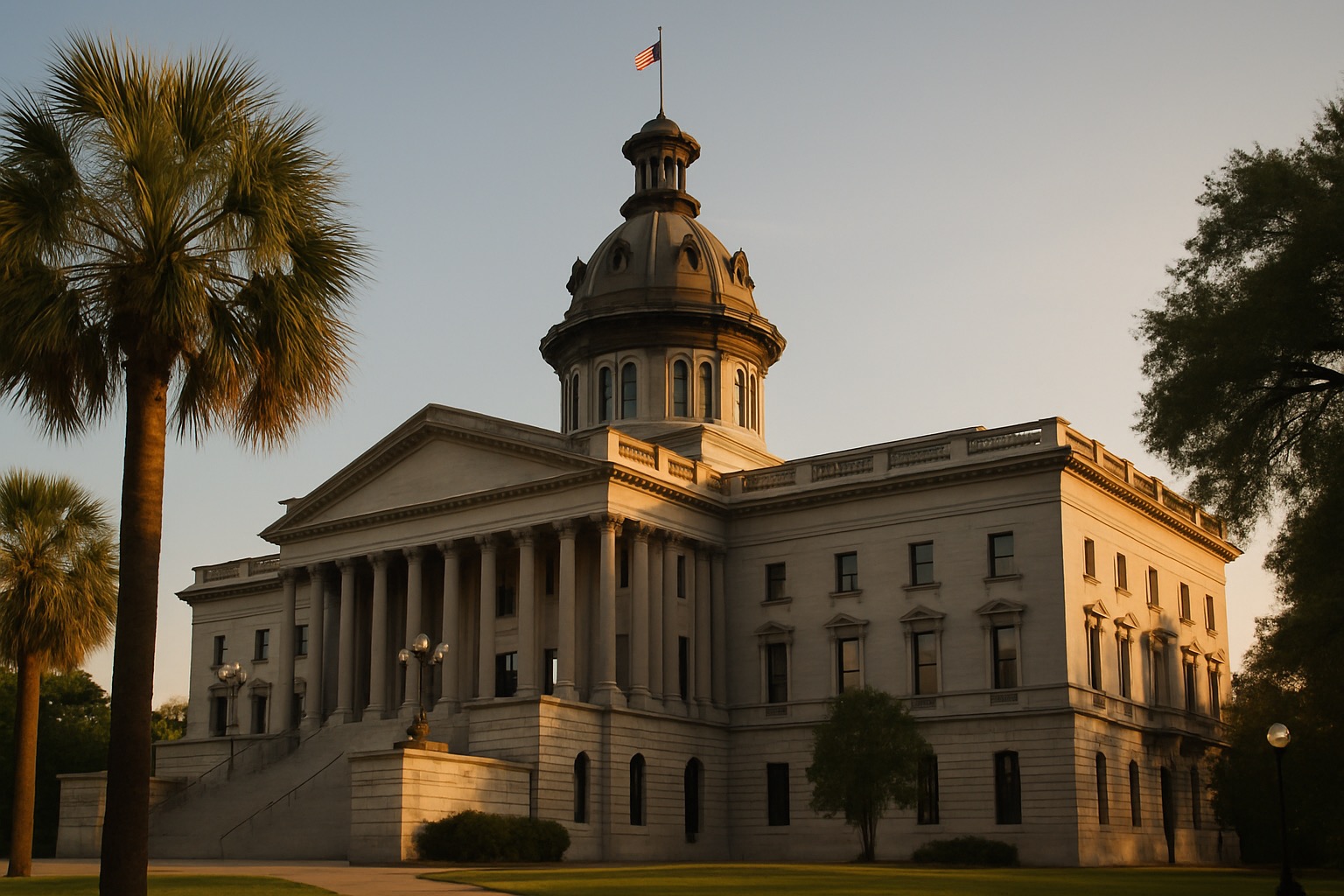
The South Carolina Republican Party has certified its field for the Aug. 11 special Senate primary. Twelve people filed before the deadline closed at noon on July 28. Nine will appear on the ballot. Three will not.
The certifications — and the decertifications — matter for how this race plays out between now and August 25.
Current market prices: Darline Graham holds 74%, Ralph Norman 18%, and Russell Fry 6%, across $2.99 million in combined volume on Kalshi and Polymarket.
Who Was Barred and Why
The South Carolina Republican Party adopted a new rule at its June convention: to appear on the Republican primary ballot, a candidate must have voted in at least two of the last three statewide GOP primary elections. Two of the decertified candidates ran afoul of that threshold.
Danny Ford II — son of legendary Clemson head coach Danny Ford — had run in the June state agriculture commissioner GOP runoff but acknowledged he had not voted in enough GOP primaries to qualify under the new standard. Darius Mitchell, a self-described "hip-hop Republican" who had placed fifth in the June primary against Lindsey Graham, faced the same disqualification.
The third barred candidate, Clark Neilson, listed a Charlotte, North Carolina address in his filing paperwork. Under party rules, candidates must be a bona fide South Carolina resident at the time of filing. Neilson told The State newspaper he plans to build a house on land he owns in Charleston County, but that did not satisfy the party's residency requirement.
Ford said he knew the party was "looking to keep Democrats out" of GOP primaries and acknowledged not voting as often as he should, citing family and work commitments.
The Nine Who Remain
The certified field is: Darline Graham, Ralph Norman, Russell Fry, Mark Sanford, Duke Buckner, Mark Lynch, Mark McBride, Samuel Shepherd, and Glenda Gail Parker.
The most notable absence from the pool is former Rep. Nancy Mace, who floated a bid and ultimately declined to file. Mace subsequently endorsed Norman, calling a family member running for the late senator's seat "pure nepotism."
Sanford is a long-shot but a known quantity — former congressman, former governor, former Republican presidential candidate. His presence gives the Aug. 3 televised debate, airing on Fox Carolina and Gray Media affiliates statewide, an additional dimension: Sanford is capable of the kind of pointed exchange that generates headlines.
The Runoff Is Near-Certain
To win the nomination outright, a candidate must clear 50% of the vote on August 11. With nine candidates splitting the Republican primary electorate — and with no single candidate polling above the low 20s in surveys conducted before Trump's endorsement of Darline Graham — the runoff has become the default expectation.
Graham's 74¢ market price reflects her structural advantages: Trump's explicit endorsement, her current incumbency (she was appointed by Gov. Henry McMaster after her brother Lindsey Graham's July 11 death), and the default association with the Graham name in a state he represented for more than two decades. Norman and Fry are the most credible challengers, both sitting members of Congress with established donor networks.
The question the primary resolves is not whether a runoff happens — it almost certainly does — but who joins Graham on the August 25 ballot. Norman's 18¢ suggests the market views him as the likeliest second-place finisher, though Fry's 6¢ reflects meaningful uncertainty about whether that order holds.
The November Picture
Whoever wins this primary and the potential runoff will face Democratic nominee Dr. Annie Andrews, a pediatrician, in the November 3 general election. The South Carolina Senate general election market prices a Republican victory at 88%.
At 88%, the market is saying this seat stays Republican regardless of the nominee. The primary and runoff determine which Republican heads into what amounts to an 88-cent sure thing in November. That calculus is one reason Trump's endorsement has moved Graham to 74¢ rather than to 95¢-plus: primary voters are making a real choice between candidates, and the party purge has cleared some of the noise from the field without definitively crowning a winner.
The Aug. 3 debate, the Aug. 11 primary, and the likely Aug. 25 runoff are the actual decision points. South Carolina's Senate seat is staying Republican. The question is which Republican.
Sources: SC Daily Gazette (July 29, 2026); The State (July 28, 2026); Fox Carolina (July 29, 2026); WYFF News 4 (July 27, 2026); SC Votes, scvotes.gov. Market prices from electionpredictions.us consensus data at time of publication.