SC's 25% Undecided Break Toward Fry and Sanford — The Market Doesn't Reflect It
The market prices a Graham vs. Norman runoff. But undecideds in SC's GOP Senate primary are leaning Fry and Sanford, not the two leaders.
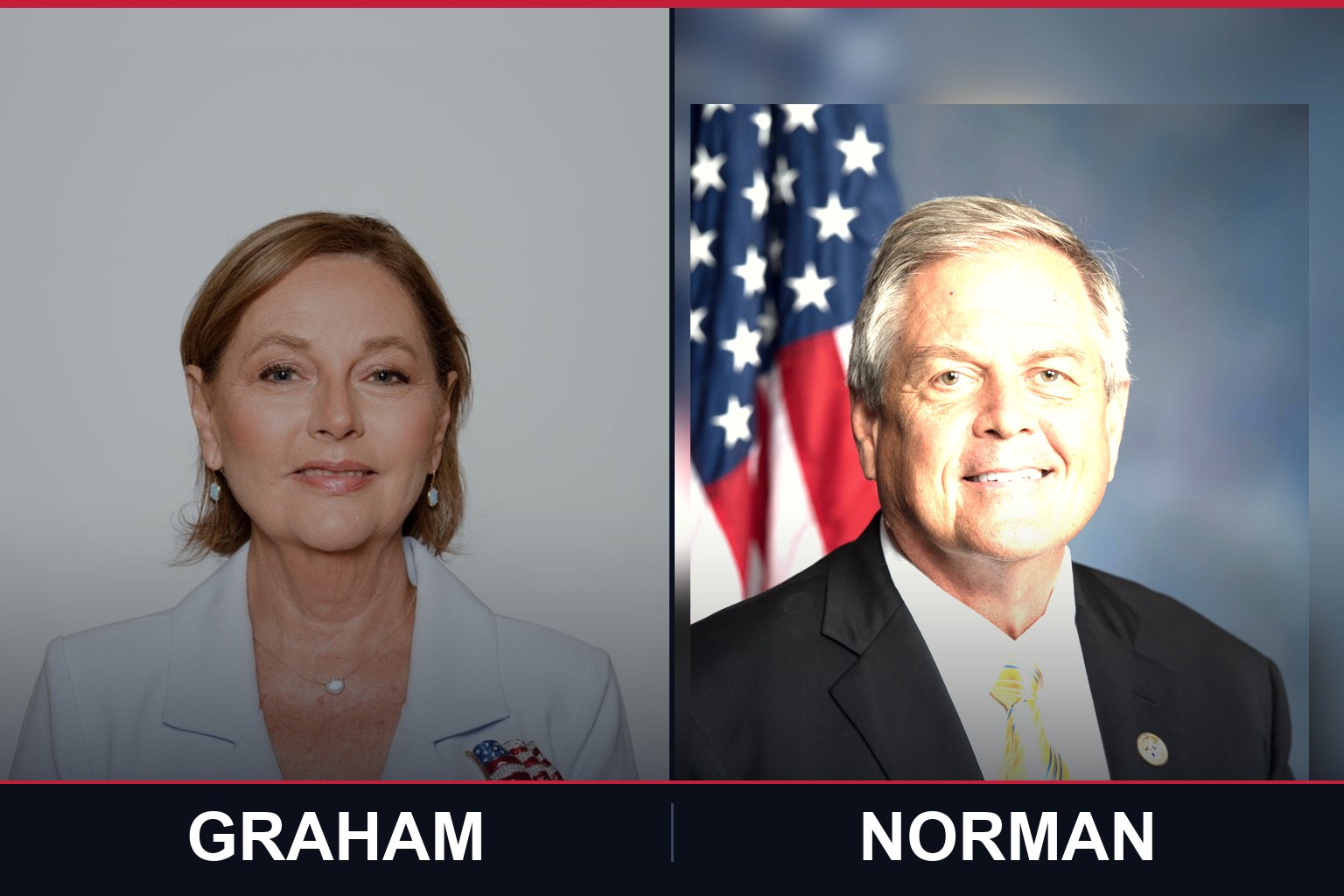
The South Carolina Republican Senate special primary is shaping up to be less a two-candidate race than the market is pricing — and the data to prove it came out in Thursday's Emerson College poll.
As of Friday morning, consensus pricing across Kalshi and Polymarket has Darline Graham at 53% and Ralph Norman at 41% — on $3.6 million in total volume. Russell Fry and the remaining candidates combine for the balance. That's a market confident in a Graham-Norman runoff on August 25, with Fry and Sanford barely registering.
The poll tells a more complicated story.
What the Emerson Data Actually Says
Emerson College Polling surveyed 500 likely GOP primary voters from July 28-29 (±4.3 points). Among those with a first-choice candidate: Norman 22%, Graham 19%, Fry 12%, Sanford 11%, businessman Mark Lynch 7%, Danny Ford II 2%. A quarter — 25% — were still undecided ahead of the August 11 vote.
That undecided number is large enough to scramble the race entirely. But here's the piece of the poll that's gotten less attention: when the undecided respondents were asked which candidate they lean toward, Fry and Sanford each drew 21% — ahead of Graham's 17% and Norman's 14%.
The candidate the market has at 6% ties for first choice among undecided voters. The candidate priced at 53% is third among that same group.
This does not mean Fry wins. First-choice and undecided-lean-toward numbers measure different things, and Fry's congressional district base is smaller than Norman's statewide footprint. But it does mean the market's current implied probability structure — which assigns Norman roughly 6.5 times as much probability as Fry — may be missing something.
The Runoff Structure Matters
South Carolina's special primary requires a majority to avoid a runoff. With nine candidates certified for the ballot and public polling showing the top two combining for just 41% of declared support, an August 25 runoff is near-certain. Political scientist Danielle Vinson of Furman University told WYFF4 that the crowded field and compressed timeline make a runoff likely from a structural standpoint.
In a runoff, the question shifts: who advances to the top two on August 11?
If Fry or Sanford captures a larger share of undecideds than the market is pricing, either could push Norman out of the runoff slot — leaving Graham to face a different opponent entirely. Norman's strategic value in the current market price rests heavily on the assumption that he is the one consolidating the non-Graham vote. The undecided lean-toward data, at minimum, puts that assumption in question.
The Endorsement Math
Trump's endorsement of Graham is the other variable the market may be overweighting. The same Emerson survey found that 53% of likely GOP primary voters say Trump's endorsement has no impact on their vote. Twenty-nine percent say it makes them more likely to support Graham; 18% say less likely.
For context, Trump carried South Carolina by 18 points in 2024. In a low-turnout special primary drawing the most engaged Republican voters, an endorsement carrying no impact with the majority of the electorate is a meaningful data point.
Graham's support is most concentrated among voters over 70 — 30% of that age cohort backs her. Norman's base skews younger: 24% of under-50 voters and 25% of those in their 50s. In a compressed special election cycle where turnout patterns are harder to model, the age distribution of each candidate's base matters.
The Debate Catalyst
The August 3 South Carolina Republican Party/Gray Media statewide debate — now three days away — is the first live test of how these candidates handle each other directly. Emerson found that 88% of Republican primary voters consider candidate debates "very important" or "somewhat important" before the August 11 vote. Only 12% say a debate is unnecessary.
For a race defined by a compressed eight-day sprint from debate to primary, Monday night's forum is the market's next major pricing event. If Fry lands a breakout moment with voters who are already leaning toward him among undecideds, the 6¢ Fry probability in the current market could be among the biggest mispricings on the board.
The August 11 primary is followed by an August 25 runoff if no candidate clears a majority — which the only public poll strongly suggests is the likely outcome.
Sources: Emerson College Polling/Nexstar Media Group poll (July 28–29, n=500, ±4.3%), published July 30, 2026; The Hill/Ryan Mancini (July 30, 2026); WBTW/Caleb McCusker (July 30, 2026); Newsweek (July 27, 2026, Resonance Media Services poll, July 21); WYFF4 (July 27, 2026). Market prices: cross-platform consensus (Kalshi, Polymarket), July 31, 2026.